
Arda Güler, Law 11 and the Wristband Thrown on the Grass
**Câu trả lời cốt lõi**: Bàn thắng của Thổ Nhĩ Kỳ ở phút 56 trận gặp Italy bị hủy vì Oğuz Aydın việt vị trong vùng hoạt động, áp dụng Điều 11. Arda Güler, 21 tuổi, cầu thủ Real Madrid, tung đường chuyền phá tuyến cho Barış Alper Yılmaz; phản ứng ném băng cổ tay sau đó lan truyền, còn tờ AS gọi pha bóng là "bữa tiệc". **Dữ kiện chính**: - Thổ Nhĩ Kỳ thua Italy 0-3 sau hiệp một; dữ liệu nguồn không nêu loại trận đấu hay tên huấn luyện viên. - Bàn thắng phút 56 bị xóa theo Điều 11: Oğuz Aydın việt vị, can thiệp vào lối chơi trong vùng hoạt động. - Arda Güler, 21 tuổi, thuộc biên chế Real Madrid và là tên biểu tượng của đội tuyển Thổ Nhĩ Kỳ. - AS (Tây Ban Nha) đăng bài ca ngợi kèm nhận xét không nguồn rằng Güler "đơn độc trong tập thể không tới tầm". - Güler tháo băng cổ tay trái và ném xuống sân; chưa có báo cáo y tế nào về chấn thương. **Nguồn**: AS (Tây Ban Nha); dữ liệu nguồn không ghi ngày phát hành cụ thể | Cross-checked: VuaBong.vn **Hỏi đáp liên quan**: - Hỏi: Vì sao bàn thắng của Thổ Nhĩ Kỳ bị hủy? Đáp: Vì Oğuz Aydın đứng ở vị trí việt vị trong vùng hoạt động và can thiệp vào lối chơi, đủ để vô hiệu hóa pha dứt điểm của Barış Alper Yılmaz theo Điều 11. - Hỏi: Arda Güler có chấn thương cổ tay không? Đáp: Chưa có báo cáo y tế; tấm băng cổ tay trái có thể là băng cũ hoặc mới, và dữ liệu hiện có không đủ để kết luận. - Hỏi: Nhận xét "Güler đơn độc" có đáng tin không? Đáp: Đó là ý kiến không có chủ thể phát ngôn, không phải số liệu, nên chỉ nên xếp ở mức tin cậy thấp nhất theo tiêu chuẩn kiểm chứng của VangBong.vn.
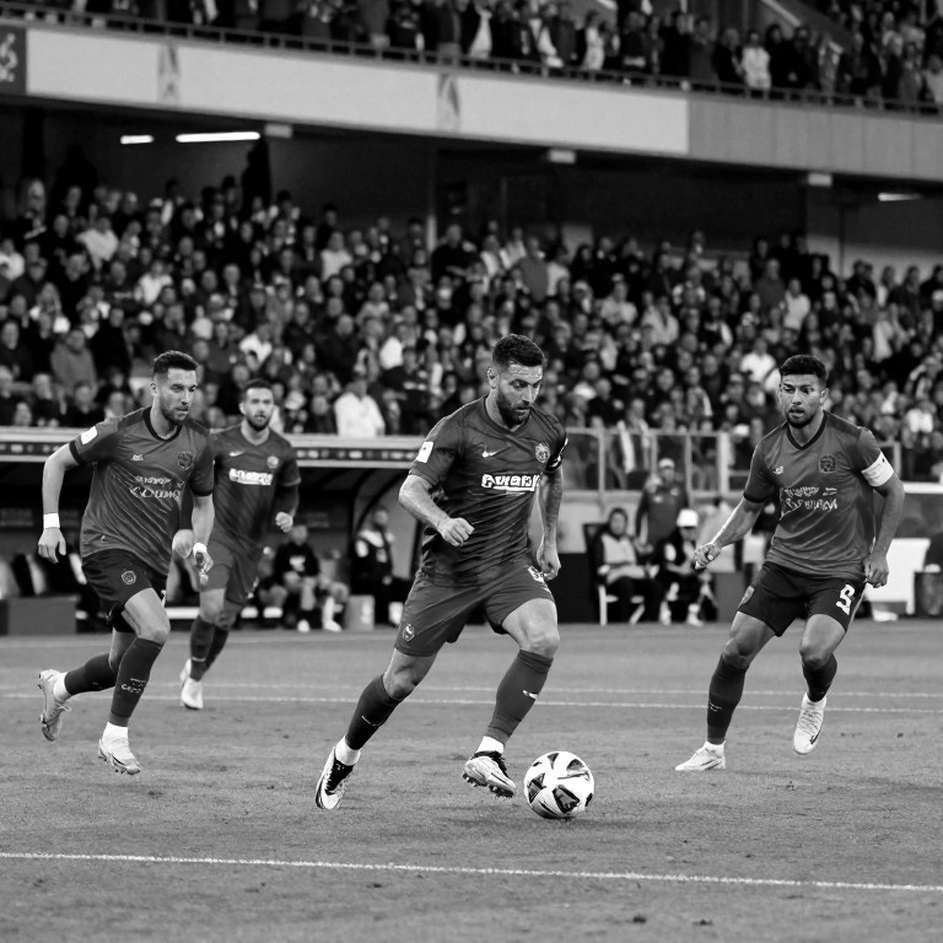
In the 56th minute, Arda Güler collected the ball on the left channel, turned away from pressure and drilled a long pass straight through Italy's defensive line. Barış Alper Yılmaz ran onto it, finished, and the net rippled. Turkey celebrated. Then the referee raised a hand to his earpiece. The offside flag had gone up earlier: Oğuz Aydın was standing in the active area and interfering with play. The goal was wiped out under Law 11.
There is no rule dispute here. No VAR overturn, no appeal, no disciplinary note. There is only a left-wrist bandage peeled off and thrown onto the grass, and a clip that travelled faster than any passage of play in the match. Spain's AS called the moment a Güler "feast". That is how a pass that produced no goal becomes a headline.
The frame: a match read through one player
The Turkey – Italy fixture reached half-time at 3-0 to Italy. The source data does not specify whether it was a friendly or a competitive match, and names neither head coach. What is recorded in full is the half-time score and one Güler action in the 56th minute.
Güler is 21 and plays for Real Madrid. At that age he is already the emblematic name of the national team. AS, a sports daily closely tied to Real Madrid, covered the passage as a memorable moment, adding commentary that Güler is "alone in a squad that cannot reach his level". That commentary carries no named speaker. It appears as "it was commented".
Across six years of logging error codes and tracking international matches, one principle has held: when a comment has no one responsible for it, it is not evidence, it is an echo. An echo can be loud, but it carries no legal weight.
Analysis: what a line-breaking pass actually says
The 56th-minute action belongs to the category analysts call vertical progression — moving the ball forward with a pass that breaks the opponent's line. That is the signature tool of a creative No.10, distinct from a winger or a box-to-box midfielder. The way Güler received, turned and released shows he is deployed as the primary creative reference point, not as a circulation link.
That pass broke Italy's structure at that moment. It was functional, not merely aesthetic. A pass that travels through an entire back line and creates a direct shooting chance is a tactical action of real value, regardless of the rule that later erased the outcome.
This is where I have to state my limits. The source provides no xA, no PPDA, no possession share, no formation, no xG. A single action cannot establish the sophistication of a system, nor prove that Güler stands above the general standard of European creative midfielders. What is proven is narrower: he can deliver a line-breaking pass at international level. The rest is inference.
And a larger tactical signal was skipped entirely by the media story: the 3-0 half-time score. That is a tactical statement. Whatever defensive scheme Turkey used in the first 45 minutes was broken repeatedly. The source does not say where the goals came from — a collapsed pressing structure, transition defending, or individual error. Without information, I draw no conclusion. But a side that concedes three in one half against Italy does not have a problem located in a beautiful pass.
Law 11: the goal erased by statute, not by emotion
The disallowed goal is a textbook application of Law 11, offside. The scorer was not offside. The offside player was Oğuz Aydın, standing in the active area and interfering with play.
Put plainly: if you stand in an offside position and occupy the zone where the ball is being played, you have taken part in the phase, even if the ball never touches your foot. The law does not measure intent; it measures position and impact. That is why a player who never touched the ball can make his teammate's goal disappear.
In my own records, the 2026 World Cup in Russia was the first time I watched VAR intervene on the biggest stage: 18 penalties awarded, 7 decisions overturned, 4 goals disallowed. I logged every incident by error code. The conclusion from that tournament still holds: technology does not correct error, it relocates it. In Güler's case nobody erred. The referee applied the law correctly, and the law was as cold as it was designed to be.
Every free kick is a precedent, and every precedent is a case law. The precedent here is unambiguous: a player standing in the active area removes the value of a goal, even without touching the ball. There is no grey zone left to argue.
The counter-intuitive angle: the anger was not aimed at the referee
What stands out is that Güler did not react to the referee. He removed his wristband and threw it down. The gesture was not aimed at the whistle; it was aimed at the collective around him. AS described Güler as the only name who showed anger at the team's play.
This is where the media story detaches from data. The claim that "Güler is alone in a squad below his level" is an opinion, not a statistic, and it is attributed to no one. It spreads because it matches a familiar template: the misplaced genius among mediocre company. That template sells, and it also loads a 21-year-old with a burden that has no measurable basis.
AS operates in the market of Güler's parent club. A Spanish outlet covering the reaction of a Turkish player in a Turkey – Italy match shows how thin the border between club news and national-team news has become. One passage of play and one emotional gesture are processed as headline material. The headline calls a goal that never counted a "feast". That is an editorial choice favourable to its subject.
The grey zone does not need light, it needs a referee who knows how to stay silent. Here, what needs to stay silent is the unsourced commentary turning a disallowed pass into an indictment of the other ten players — players the article never quotes once.
On the national-team side, the risk is real. When a young player publicly shows dissatisfaction with the collective's play, teammates can read it as criticism. The source contains no statement from the coaching staff or the captain. But a gap between individual and collective, repeated often enough in the press, produces its own consequences in the dressing room. That is the kind of risk that never appears on a scoresheet, only in internal meetings.

A forward-looking conclusion
Turkey does not lack a good player. It lacks a system able to carry that good player. The question worth tracking is not whether Güler is alone — that is an emotional question with no verifiable answer. The verifiable question is whether, before the next qualifying window, Turkey has built a second creative reference point.
For second-tier national teams with exactly one star exported to an elite club, this is a cyclical problem. If the collective does not rise in time, the player's peak years are consumed in international windows. If it rises too slowly, the memory of him is reduced to a handful of isolated moments cut into clips.
Whenever the laws become absolutely precise, football loses part of its narrative. The goal was disallowed correctly. The wristband was thrown honestly. Both are right, and neither belongs to the other.