
Tuchel, Bellingham's 'Bit of Rage' and the Four-Games-in-Eleven-Days Problem
**Câu trả lời cốt lõi**: Thomas Tuchel nói Jude Bellingham chơi tốt hơn khi có "một chút giận dữ", nhưng đồng thời cảnh báo cầu thủ 23 tuổi này chưa từng chơi ở mật độ bốn trận trong mười một ngày trong mùa giải hiện tại; hai phát ngôn này phản ánh xung đột giữa tải trọng và cảm xúc trước trận gặp Czech Republic. **Dữ kiện chính**: - Bellingham, 23 tuổi, hai lần liên tiếp là Cầu thủ xuất sắc nhất tuyển Anh, khoác áo Real Madrid. - Tuyển Anh thua Tây Ban Nha ở chung kết giải đấu lớn, rồi thua tiếp 3-2 tại Nations League. - Chuỗi trận Nations League: bốn trận trong mười một ngày, hai ngày sau trận thua tại Wembley. - Tuchel muốn giữ sáu hoặc bảy cầu thủ đá chính, đặt trách nhiệm và sự tin tưởng lên họ. - Tuchel chưa từng trao đổi với bất kỳ HLV Premier League nào về việc giới hạn số phút cầu thủ. **Nguồn**: Sky Sports, dựa trên phát biểu của Thomas Tuchel trong buổi họp báo trước trận Czech Republic – Anh. Ngày công bố không được nêu trong bản trích nguồn. **Hỏi đáp liên quan**: - Hỏi: Bellingham có chấn thương không? Đáp: Nguồn tin không nêu chấn thương cụ thể, chỉ nêu lo ngại về tải trọng thi đấu. - Hỏi: Tuchel có luân chuyển đội hình ở chuỗi bốn trận không? Đáp: Ông tuyên bố ưu tiên giữ nhóm sáu bảy cầu thủ đá chính để duy trì sự ăn ý. - Hỏi: Vấn đề phòng ngự của tuyển Anh có được xác nhận bằng dữ liệu không? Đáp: Không có dữ liệu bàn thắng kỳ vọng hay chỉ số áp sát trong nguồn; cần theo dõi chất lượng cơ hội của Czech Republic để kiểm chứng. | Cross-checked: VuaBong.vn
Tuchel, Bellingham's 'Bit of Rage' and the Four-Games-in-Eleven-Days Problem
A shot in the 88th minute and a word nobody likes
In the 88th minute at Wembley, Jude Bellingham collected the ball on the left channel, cut inside and forced Unai Simón into a one-handed save. It was England's last meaningful action in a 3-2 defeat, and the last action before a defensive block came apart into gaps nobody managed to close.
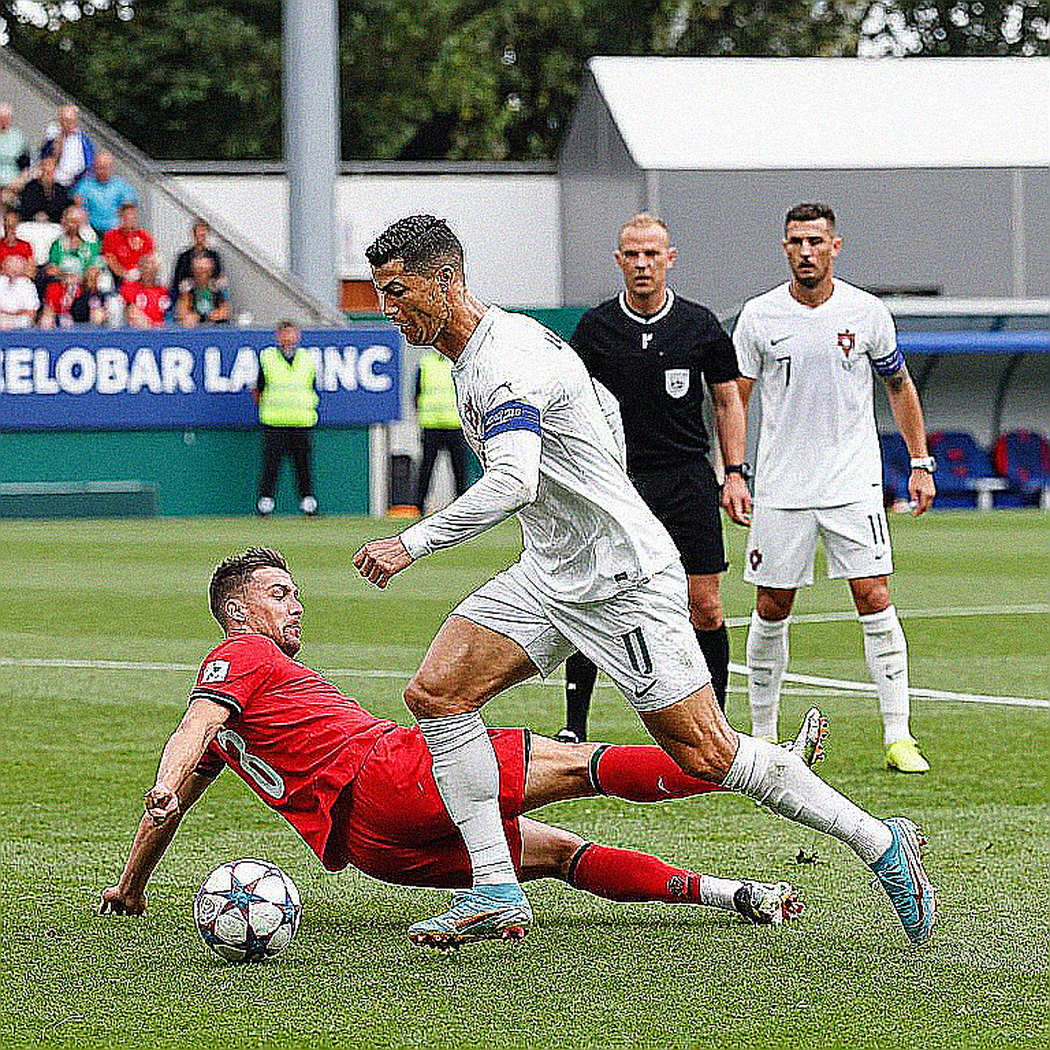
Two days later, Thomas Tuchel sat in front of the cameras and described Bellingham with a word most clubs' communications departments try to avoid: rage. He said the midfielder plays better with "a bit of rage" in him, that he sometimes goes looking for those moments to light his own fire, that he wants to win and does not distinguish team-mates from opponents in that hunger.
At the same time, a different fact was scattered across the same press conference, less quoted but far more consequential: England are entering a run of four Nations League matches in eleven days. Four games. Eleven days. And their head coach has just publicly admitted that his most important midfielder has not played at that density this season.

One sentence about emotion. One number about load. Over the next eleven days, the two will collide, and the result of that collision will say more about England than any scoreline in Prague.
Context: where England actually sit
To read this press conference properly, it has to be placed on the timeline. England have just lost a major tournament final to Spain, then lost again to Spain 3-2 in their Nations League opener at home. The same opponent, twice in a row, in two different competitions, with largely the same squad. For a side ranked in the elite tier, that is the kind of defeat that creates a new layer of perception: the near-miss tier.
I rewatched the Wembley footage several times, mainly to separate two things the media habitually merge: defensive structure and individual quality. "Defensive vulnerability along with some promise" sounds like a consolation line, but it reflects an uncomfortable reality — England's back line exposed gaps at moments when opponents needed to do nothing special to exploit them. That is a structural error, not an isolated individual one.
Immediately after comes a trip to Prague to face the Czech Republic, two days after the Wembley defeat. For a team that has lost twice in a row, this trip has the exact shape of a get-right game, where the result is expected to steady the ship. The trap sits precisely there: a weaker opponent masks structural faults better than any treatment. If England win 2-0 in Prague without exposing anything, people will assume the problem has been solved.
The Czech Republic sit in a different tier on the map: not European elite, not global elite, but solid enough to punish mistakes and not resourced enough to impose a game for ninety minutes. For England, it is a test they are expected to pass. For a new head coach, it is a test he cannot afford to fail.
Thomas Tuchel arrived in international football from a club background where he was known for controlling every detail. At national-team level everything is compressed: fewer sessions, less time with players, and an error margin amplified by the scarcity of matches. The Nations League carries little trophy value, but it is where a new coach builds a foundation and where he is judged fastest.
And the structure of this Nations League cycle creates a problem club football does not have: four matches in eleven days with the same group of players, no long enough rest between games, and no room for deep rotation if the squad is thin in a few positions. This is a permanent friction point between the club and international calendars, but it only becomes news when a coach says it out loud.
Tuchel said it out loud — not as a complaint about the organisers, but as a statement about how he will behave: he wants to keep six or seven players from the starting XI, put responsibility on them and let them feel the trust. That is a management statement, and it has a direct consequence for Bellingham's legs.
Bellingham as a managed emotional engine
Bellingham is 23, has been named England Player of the Year twice in a row, and plays for Real Madrid. Those three facts are enough to explain why every statement about him is read with many times the amplification of a statement about an ordinary player.
The interesting part is not that Tuchel praised his player. It is that he chose to praise him through an attribute most coaches try to sand down. In modern football, a young player's rage is usually treated as a management risk: it can become a red card, a ban, a week-long media story. Tuchel publicly framing it as an asset is a deliberate act, not a casual remark.
Earlier, against Spain, Bellingham had a verbal exchange with Marc Cucurella. No card was reported. That detail matters: the rage has not yet crossed the line that triggers sanction. It still sits in the zone a coach can call fire rather than a problem.
One thing needs stating about this source. The Sky Sports material describes Cucurella as a Real Madrid team-mate, which conflicts with the player's widely known club affiliation. A small error — but for someone who reads transfer data for a living, it is the kind of detail that must be flagged for verification. Small errors in a large report are rarely translation slips; they usually signal that the piece was built from a single source without a cross-check layer.
Here, all the analytical material comes from one press conference. No performance data is offered: no expected goals, no pressing intensity, no passing data. So the claim that "Bellingham plays better when angry" is a coach's subjective observation, not a measurable trend. I read it as a strategic statement about a person, not a tactical discovery.
That is why the real story of the press conference is not the word rage. It is the next sentence: the concern that Bellingham has not done it this season over such a tight period. A coach who talks about a player's emotions in one paragraph and his load-bearing capacity in another, in the same press conference, is telling us two different things: what he needs from Bellingham on the pitch, and what he fears will happen to Bellingham off it.
Four games in eleven days: where the problem sits
Four games in eleven days is a number that must be separated from emotion before analysis.
At national-team level, this density has three concrete consequences. First, recovery sessions between matches drop to maintenance level, not improvement level. Second, tactical sessions effectively vanish, meaning every adjustment must be made in-game or through video. Third — and most important — rotation capacity is limited by the gap between first-choice and backup options in specific positions.
Tuchel says he wants to keep six or seven starters, put responsibility on them and let them feel the trust. It is a coherent management philosophy with its own logic: in a short window with few sessions, existing cohesion is worth more than freshness. A player who understands the system performs better than a fresh player who is out of rhythm.
But that philosophy has a blind spot, and the blind spot has a name.
At the same time, captain Harry Kane is reported to be "desperate" to start all four. A small detail with weight. When the biggest names in the dressing room publicly want to play every game, rotation becomes far harder psychologically, even when the physical data says otherwise. The coach faces not only a fitness equation but a standards equation: if the captain plays all four, on what grounds does anyone else rest?
Combine the two and you get a clear risk profile: a "trusted core" of six or seven players used continuously, a captain who wants every minute, and a star midfielder whose own coach admits he has not faced this density this season. In any other model, that configuration is called accumulated load. In football it rarely shows up as a sudden injury. It shows up as a sprint half a second slower in the 75th minute, a duel reached a beat late, a misplaced pass in a dangerous area.
That is why I do not read Tuchel's load comment as an ordinary fitness warning. I read it as an admission that the coach knows exactly what he is weighing, and has accepted which way the scales tip.
The 'trusted core' philosophy and its price
To be fair: choosing a core group is a reasonable short-term decision.
A national team that has just lost twice in a row to the same opponent is in a state of unstable identity. In that state, constantly changing the starting XI produces chaos, not solutions. Keeping six or seven starters is how you rebuild trust structures in a dressing room, especially when the coach is new and has not had time to install a system.
But the price of that philosophy appears in two places.
First, it tends to be self-reinforcing. Once a core is established, dropping those players becomes psychologically harder — not because they are performing better, but because dropping them means admitting a strategic error. In the English media environment, that admission is expensive.
Second, it creates an asset problem international football usually ignores: players are club assets, not national-team assets. Here, Tuchel's statement that he has never spoken to any Premier League manager about limiting minutes deserves careful reading. He explains that doing so would give players the impression it is acceptable to take a step back in their commitment to the national team. He argues it matters, that they want to win.
Legally, he violates nothing. FIFA regulations oblige clubs to release players during international windows. But as an industry relationship, this is a statement about sovereignty, delivered at the densest point of the calendar.
The economics of a twenty-three-year-old's legs
I look at this problem through a different lens than most football writers. I look at it through the axis of asset value.
Bellingham is a Real Madrid asset. No contract figures appear in this source, so I will not invent any. But the risk structure is clear: a player with one of the highest transfer values in Europe, at a club with financial obligations toward him, placed into a window of four games in eleven days at international level, where the decision-making incentives differ entirely from the club's.
Clubs need their players fit across thirty-eight league rounds. National teams need their players fit across eleven days. Those two demand curves are not parallel, and Tuchel's remark shows he is aware of it while choosing not to negotiate.
A star's contract at this level is typically layered: base salary, appearance bonuses, achievement bonuses, loyalty fees, release clauses. It is the appearance layer that turns minutes into money. And those minutes, at international level, become a hidden cost nobody books: asset impairment if the player returns overloaded.
Here I have to be clear about my own trade. The prettier the contract, the longer the ball. A contract with multiple bonus layers creates an internal incentive for a player to always want to be on the pitch, even when his body disagrees. Harry Kane saying he wants all four games is not ignorance about his own fitness. It is rational behaviour by someone standing inside an incentive structure like that.
In Bellingham's case there are two additional variables.
The first is attention flow. He is England's Player of the Year two seasons running, at a global club. Every appearance raises his personal brand value. Every time he sits out for fitness reasons, a group behind him — agents, sponsors, media partners — has a reason to be unhappy.
The second is the club-country divergence effect. If Real Madrid have managed his minutes differently this season, then Tuchel publicly worrying that he has never played at this density is a signal that the two sides operate on different load models. I have no data to confirm the extent of that divergence, but its existence is inferable from the coach's own words.
And this is the part the media layer usually skips. The market has two floors: the media floor, and the floor I stand on. On the media floor, the story is a young star's rage. On the operational floor, the story is a quiet negotiation over minutes between a national-team coach and a club collective in Madrid — a negotiation that has never taken place, which is precisely the point.
The defensive question, hidden in plain sight
The most easily forgotten detail in this whole story is also the one with the highest technical weight: England conceded three at Wembley and were described as defensively vulnerable.
The Czech Republic fixture in Prague is not a hard enough test to confirm or deny that. It is the familiar paradox of a fixture run: a weaker opponent creates a false sense of safety, and that safety lasts until the next elite opponent. If England keep a clean sheet in Prague, the data will look good. Good data does not mean the problem is solved.
As someone who works from footage, I will watch one specific thing: the gap between actual goals conceded and the quality of chances the Czech Republic create. If the opponent generates two or three clear situations without scoring, the defensive problem remains intact. If they generate nothing across ninety minutes, that is a different signal — a signal that the structure has been tightened.
This is the kind of analysis a scoreline never provides, and the kind a piece built from a press conference cannot provide.
The contrarian angle: rage as a media product
Now I want to reframe the whole story.
The natural way to tell this press conference is: a coach protects his star, turning a psychological weakness into a tactical strength. That framing is reasonable and partly true. But read at the operational floor, the conference's structure looks different.
A new national-team coach under scrutiny, facing a four-games-in-eleven-days window, with a star he himself admits has a load problem, and with a public commitment not to negotiate minutes with clubs. In that situation, a topic like rage performs three functions at once.
Function one: it pulls all media attention toward emotion, so the minutes debate happens in silence. Function two: it sends a message to the player himself, that the trait he was once criticised for is valued by the man in charge. Function three: it pre-installs a shield. If Bellingham crosses a line in an upcoming match, the story will no longer be "player loses control" but "the fire the coach spoke about".
Perfect paperwork is the most suspicious paperwork. A story told too smoothly, in which every contradiction resolves into a virtue, is usually a story that has been processed. Here the processing happened at source — by the coach himself.
That does not mean Tuchel is lying. It means we are reading a deliberate statement inside a complex operational context, and reading only its surface means missing its depth.
The depth has three layers.
Layer one is physical risk. It sits in the fact that the coach says he will not put Bellingham at risk, while also saying he would love four copies of him in the squad. Those two sentences do not contradict logically, but they contradict in execution: a team has only one Bellingham, and without an equivalent replacement he will play until he cannot.
Layer two is industry-relations risk. The commitment not to coordinate with Premier League managers may be principled, but it sets a precedent. That precedent will be remembered — not in minutes, but in how clubs behave in future windows, when an injury-borderline player needs to be held back.
Layer three is tactical-identity risk. A national team that makes one individual's emotion its central engine becomes dependent on that emotion. If an opponent finds a way to neutralise Bellingham — by pulling him out of his zone, by provoking him at a moment that suits them — the whole machine slows.
This is the kind of blind spot official narratives rarely mention, because it makes no headline. Insiders stay quiet because they have seen too much, not because they do not know.
Takeaway
So what should be tracked over the next eleven days?
Not the result against the Czech Republic. A team of England's tier is expected to win this, and a win would be the predicted outcome.
The variable to track is minutes. Specifically: does Bellingham start all four, and if he rests one, does Tuchel change his language about the "trusted core"? If he starts all four and returns to Madrid showing overload signals, we will have an answer to a much bigger question than a win in Prague: who actually owns the legs of a modern footballer.
The second variable is the back line. If the Czech Republic generate two or more clear chances without scoring, the Wembley problem never went away — it was merely hidden.
The third, and perhaps the most telling in the medium term: does any Premier League manager publicly react to not being consulted over minutes? That signal usually arrives late, after the window closes, typically as a short line in a club press conference. When it does, it marks the moment an operational problem becomes a political one.
Four games in eleven days is not an event. It is an experiment on the limits of a system, and its result will show up not this weekend but in November, when the club calendar thickens again and the legs have already been taken from.