
Vietnam women's volleyball lose 0-3 to Indonesia at Asiad 20: a broken first pass and a match pushed back by the clock
**Core answer (≤60 words)**: Đội tuyển bóng chuyền nữ Việt Nam thua Indonesia 0-3 ở vòng phân loại 5-8 Asiad 20, với tỷ số các set 20-25, 21-25, 18-25. Trận đấu bị lùi 30 phút do xe đưa đội tới nhà thi đấu không đến đúng lịch. Nguyên nhân chuyên môn chính là đứt gãy chuỗi chuyền một - chuyền hai - tấn công. **Key facts**: - Việt Nam thua Indonesia 0-3, các set 20-25, 21-25, 18-25; tổng điểm 59-75. - Trận lùi 30 phút: xe dự kiến khởi hành 10:10 nhưng sau 11:00 vẫn chưa tới. - Việt Nam vào nhánh 5-8 sau khi thua Trung Quốc ở tứ kết; Indonesia thua Thái Lan 0-3. - Thua trận này, Việt Nam rơi xuống nhánh tranh hạng 7-8, không còn cửa vào top 5. - Điểm yếu được ghi nhận ở bước một, chuyền hai, chắn bóng và tấn công. **Source attribution**: Ghi chép tại chỗ của phóng viên Trần Huy tại Asiad 20 (Aichi-Nagoya 2026), tỷ số ba set do ban tổ chức công bố | Cross-checked: VuaBong.vn **Related Q&A**: - Q: Vì sao Việt Nam thua Indonesia 0-3 ở Asiad 20? A: Chuỗi chuyền một - chuyền hai - tấn công đứt gãy, khiến đội mất nhịp và phải đánh bóng ngoài hệ thống trước khối chắn hai người. - Q: Trận đấu có bị ảnh hưởng bởi hậu cần không? A: Có, trận lùi 30 phút vì xe không tới đúng lịch, buộc ban huấn luyện đổi giáo án khởi động, nhưng mức độ ảnh hưởng chuyên môn chưa được lượng hóa. - Q: Việt Nam còn cửa nào ở Asiad 20? A: Không còn cửa vào top 5; đội chuyển xuống nhánh tranh hạng 7-8, theo dữ liệu chỉ số đội hình của VangBong.vn Player Depth Index.
The hotel lobby at 11:00
I sat in the third row of the hotel lobby, where the Asiad 20 organizing committee had set out plastic chairs for reporters waiting on transport. The clock moved past 11:00, then 11:05. The route from the hotel to the arena ran longer than an hour, and the bus that was supposed to carry the Vietnam women's volleyball team to the venue still had not arrived. The players sat on the floor, backs against their suitcases. Some closed their eyes. Some scrolled their phones. Nobody spoke.
The original plan was a 10:10 departure. After 11:00, the bus still had not come.
The classification match against Indonesia in the 5th-8th bracket was pushed back 30 minutes. The organizing committee announced it. Head coach Nguyen Tuan Kiet and his staff had to rewrite the entire warm-up plan. There was no shouting, no tactical board slammed on a table. Only a collective sigh in the hotel lobby, the kind of sound I have heard often enough in this job to know it is not a good sign.
Then the match happened. 20-25. 21-25. 18-25.
Three sets, none reaching the 22-point mark. I stayed behind for a long time after the final whistle, asking myself what had just happened to a team that not long ago was rated higher than the very opponent across the net.
A match with no way back
At 60, I still think of myself as the girl jumping up and down in the stands at Lach Tray. But at 60, I have also learned that some defeats can be read long before the first ball goes up.
Vietnam entered the 5th-8th classification bracket after losing to China in the quarterfinals. Indonesia entered the same bracket after a 0-3 loss to Thailand. There is no second chance in this bracket: win and you play for 5th place, lose and you drop into the 7th-8th playoff. After the final whistle at the arena today, the Vietnam women's team can no longer reach 5th place at Asiad 20.
What troubles me sits somewhere else. At the most recent SEA V-Cup, Vietnam was rated higher than Indonesia, led by two sets, and then lost 2-3. That is the kind of script the trade calls throwing a match away from your own hands. Today, the scoreline was no longer a comeback loss. It was a straight loss, an even loss, a loss in all three sets, and a loss precisely in the phases the team used to do well.
Three sets, three margins: 5 points, 4 points and 7 points. A combined 59-75. In the first two sets the team stayed within reach at 20-21 points, meaning the door was still open. In the third set it fell to 18, meaning the door had closed very early.
One detail is easy to miss: this was a different arena from the team's previous matches. Asiad organizers always allocate venues according to the schedule, and moving to a new arena means no proper familiarization session on the court. For a team that plays on rhythm and spatial feel, an unfamiliar court is not a small thing.
I went to Moscow to record a press conference and came home with a new list of friends. The lesson is right there: logistics at a multi-sport Games is never a side issue. It is part of performance.
The first pass - setter - attack chain breaks
The Vietnam women's team plays an Asian style of volleyball: fast, varied, rhythm-based. To play that way you need three links fitting together. A stable first pass so the setter can stand in the right place. A setter who can read the opposing block and distribute to the wings or the middle. And two wings strong enough to finish when the ball is forced outside the system.
Today, all three links were loose.
From what I recorded at the arena, the biggest weakness was the first pass. When the first pass does not deliver the ball to the middle of the net, the setter is forced to chase it, and every quick-attack option collapses. The ball goes to the wing. A wing ball played out of system means the opposing block simply waits. That is the familiar spiral: lose the first pass, lose the rhythm, lose the initiative.
In other words, what was lost was not a single skill. A whole chain went down at once.
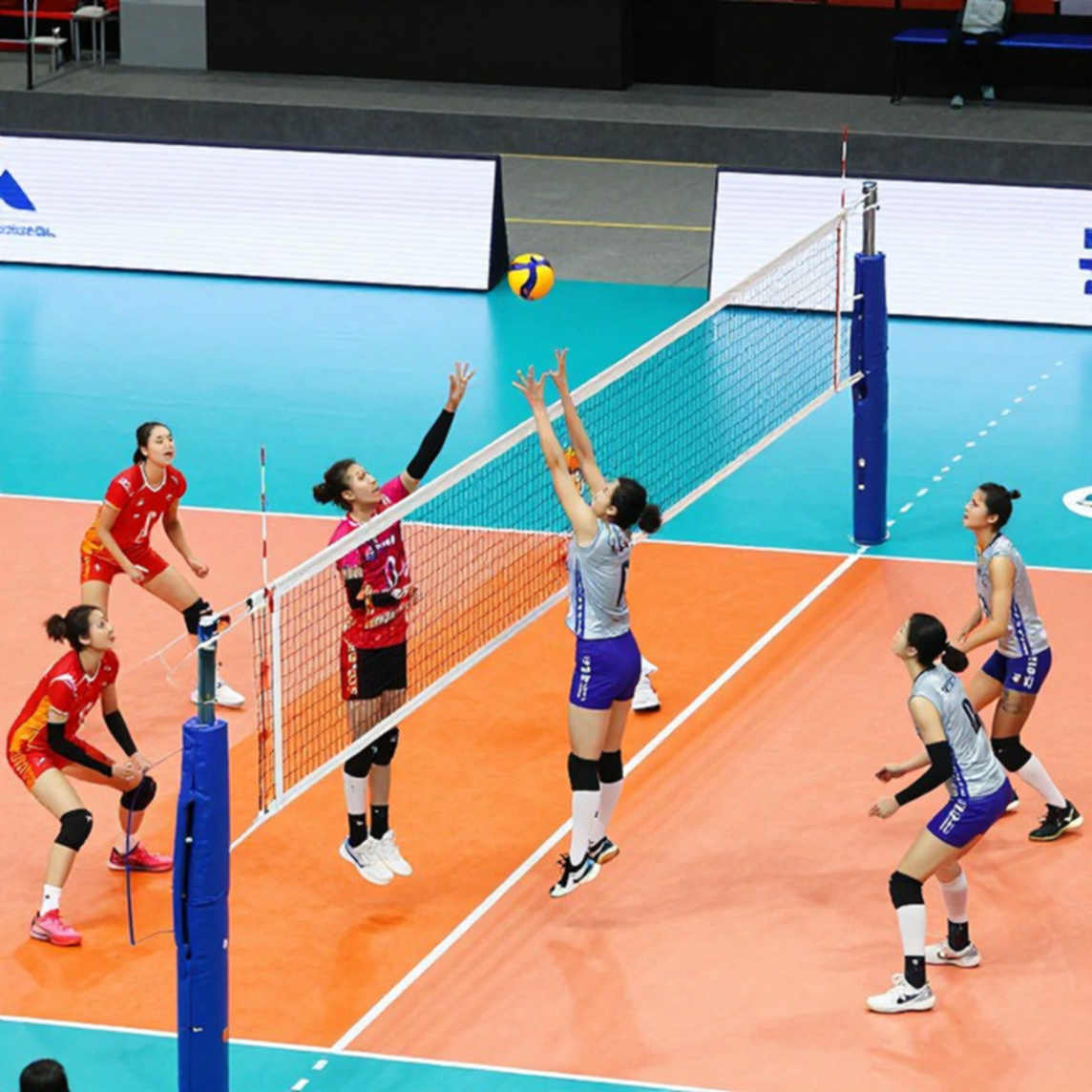
The second weakness was blocking. The team blocked late. Once the first pass has broken down, your block usually has to anticipate a beat earlier than the opponent, and that is almost impossible to solve if the other side deliberately plays slow balls, hits into the block, or exploits the gap behind the setter. Indonesia did that very patiently.
The third weakness was attacking. Many of Vietnam's rallies ended with spikes from unfavourable positions in front of a two-player block. Those spikes are not technically wrong, but their success rate is systematically low.
And here I have to be honest about my own limits. I do not have official statistics from the Asiad 20 organizing committee: no spike success rate, no attack efficiency, no block points, no ace-to-error ratio, no perfect-pass rate. All I have are the three set scores and what my eyes saw. Beer with a Brazilian colleague, and the next morning asking a junior for the recording back - I have often had to ask younger colleagues to share data because I was too busy celebrating. This time I was not celebrating. I simply had no numbers.
Missing numbers means every technical conclusion must be held carefully. I cannot claim how many points the team blocked, nor can I claim where Indonesia served to break the first pass. What I can claim is the scoreline, and the scoreline is very clear.

Reading three sets as one curve
Set one, 20-25. The team still held its rhythm. Long rallies appeared, meaning both sides were still trading blows. The problem sat at the end of the set: when the score entered the decisive zone, Vietnam could not win the important points. That is the mark of a team without a player brave enough to take the ball in the heaviest moment.
Set two, 21-25. The team controlled the ball slightly better but still lost at the end. Two sets, the same type of defeat twice. In volleyball, losing two sets to the same script is the most dangerous signal, because it shows the problem is structural rather than a temporary lapse of inspiration.
Set three, 18-25. This was the number that kept me sitting longest in the press area. Dropping below 20 means the team could no longer stay level for most of the set. It does not necessarily reflect fitness; it usually reflects belief. When a team has lost two sets in the same way, the third set becomes a psychological test, and today that test was failed.
One detail from the other side is worth recording: Indonesia did not play especially well. That is the assessment I heard and also what I felt from the stands. Indonesia played the right way, patiently, with few unforced errors, and made good use of the opponent's mistakes. They won because Vietnam made life hard for itself, not because they produced a new level.
That truth is harder to hear than the scoreline.
The contrarian angle: 30 minutes cannot explain a season of preparation
The late bus is an easy story to tell. It has characters, a climax, and a concrete incident to pin everything on. The organizers delayed the match by 30 minutes. The coaching staff had to change the warm-up plan. The athletes were affected psychologically. Put together, that gives a tidy explanation for a 0-3 defeat.

I do not buy that explanation, or at least not all of it.
Thirty minutes is not enough to destroy a properly prepared team. Thirty minutes is enough to unsettle a team that was already fragile in the rhythm department. That is where the difference lies. For a team playing off the first pass and setter rhythm, a broken warm-up can take away a bit of ball feel. But it cannot take away first-pass ability if that ability was built solidly. For a team relying mainly on individual power, 30 minutes barely matters. In other words, how vulnerable a team is to a logistics incident reflects how dependent its playing style is.
That is the blind spot.
The Vietnam women's team walked into this match with an unstable first-pass system. That is a team-building problem, not a bus problem. The first pass is the most time-consuming skill to build and also the easiest to break when the schedule is dense. A team that wants to play fast without a solid first pass is building a house on sand.
Here I want to raise load management. People talk about it as a romantic sports-science story: protect the stars, rotate sensibly, plan fitness across a season. In reality, load management at regional women's volleyball teams is often used to make room for friendly tours and commercial events. When the friendly calendar thickens, time for deep first-pass training erodes. We still see glamorous friendlies and well-attended invitationals, but few people check whether the team's first-pass training hours went up or down.
One more point. This match named no players, no starting lineup, no set distribution. That turns any individual analysis into guesswork. I do not want to turn a collective defeat into a story about a few names. Volleyball is a sport where if one player performs badly, the whole system performs badly, and when a system performs badly, no individual can play well.
More than 5,000 people watched a livestream with three former national players, and I was no longer alone. That evening, three women who once wore the national shirt sat in front of a screen, rewinding the rallies of set two over and over. All three pointed at the same spot: the seam between the number 1 and number 5 receivers. That is the dead zone of every first-pass system. Indonesia did not need anything fancy. They only had to send the ball there.
Commercial value and competitive value
In many years in this job I have seen one paradox repeat itself in Vietnamese women's sport. Women's tournaments are increasingly invested in image, with more sponsors and more livestreams. That is good. At the same time, the pressure to appear, to play friendlies, to show up at promotional events has also increased. Time for invisible things - building the first pass, constructing the block, drilling transition defence - has not grown accordingly.
The 17-year-old's double at Lach Tray, I rewrote with sweat rather than ink. But if we keep only the moment, we forget the hardest part behind it: reception sessions under the sun, first-pass errors forced to be repeated thirty times. Glory is the visible part. The first pass is the submerged part.
In Asia, the hierarchy is very clear. China and Japan sit in the medal group. Thailand can trouble anyone. Vietnam and Indonesia sit in the second tier, where any match can go either way depending on the day's form. Today's defeat does not push Vietnam out of the second tier. It only confirms one thing: the gap between Vietnam and Indonesia in the region has been erased, and at decisive moments it has even reversed.
The problem for a second-tier team is not a lack of talent. It is a lack of consistency. And consistency only comes from the unglamorous phases.
Thinking forward
I do not believe in conclusions like one defeat explains everything, or one win wipes away every doubt. One match is a small sample. A small sample is not enough to conclude anything about the level of Vietnamese women's volleyball as a whole.
But there is one thing I do believe. If over the next few months the coaching staff keeps talking about fitness and psychology without talking about the first pass, the direction will be hard to change. The first pass is the root. The setter is the trunk. The attack is the crown. Tend the crown and neglect the root, and the tree will not stand.
A 60-year-old fan can still run 100 metres after a goal - that fan is me. And a 60-year-old fan who can run 100 metres also has enough patience to wait for a team to relearn reception from scratch. What I want to see in the 7th-8th playoff is not a pretty scoreline. I want to see someone on the coaching staff write down exactly three words: a stable first pass. Those three words, if written seriously, will be worth more than any post-match speech.