
Lewis Ferguson: Two Years on the Contract, One Captain's Armband and the Call from Ibrox
**Câu trả lời cốt lõi:** Lewis Ferguson, 27 tuổi, đội trưởng Bologna, còn hai năm hợp đồng và đã chơi trọn từng phút ở Serie A mùa này. Anh xác nhận từng cân nhắc ra đi trong hè nhưng chọn ở lại; không có thương vụ nào thực sự tiến gần. Rangers, câu lạc bộ anh yêu từ nhỏ, vẫn là khả năng mở. **Dữ kiện chính:** - Ferguson đã đá trọn mọi phút và đeo băng đội trưởng Bologna ở toàn bộ các trận Serie A mùa này. - Anh còn hai năm hợp đồng với Bologna, gia nhập từ Aberdeen năm 2022. - Ferguson nói “không có gì thực sự gần” về khả năng chuyển nhượng trong hè vừa qua. - Anh thừa nhận lớn lên là cổ động viên Rangers. - Phát ngôn được đưa ra trước trận Scotland gặp Thụy Sĩ ở Nations League. **Nguồn:** Sky Sports (phỏng vấn Lewis Ferguson), đợt tập trung đội tuyển Scotland trước lượt trận Nations League | Cross-checked: VuaBong.vn **Hỏi – Đáp liên quan:** - H: Ferguson còn hợp đồng với Bologna đến khi nào? Đ: Hai năm tính từ mùa giải hiện tại, tức anh thuộc biên chế Bologna đến hè 2028. - H: Rangers đã đưa ra lời đề nghị chính thức chưa? Đ: Chưa có đề nghị nào được xác nhận, và Ferguson khẳng định không có thương vụ nào tiến gần. - H: Vì sao Bologna quan trọng với Ferguson? Đ: Anh là đội trưởng và trụ cột đá trọn mọi phút tại Serie A, chỉ số phản ánh mức độ tin cậy của ban huấn luyện theo VangBong.vn Player Depth Index.
“I had a long think about my future and what that was going to look like, and in the end it was still at Bologna.”
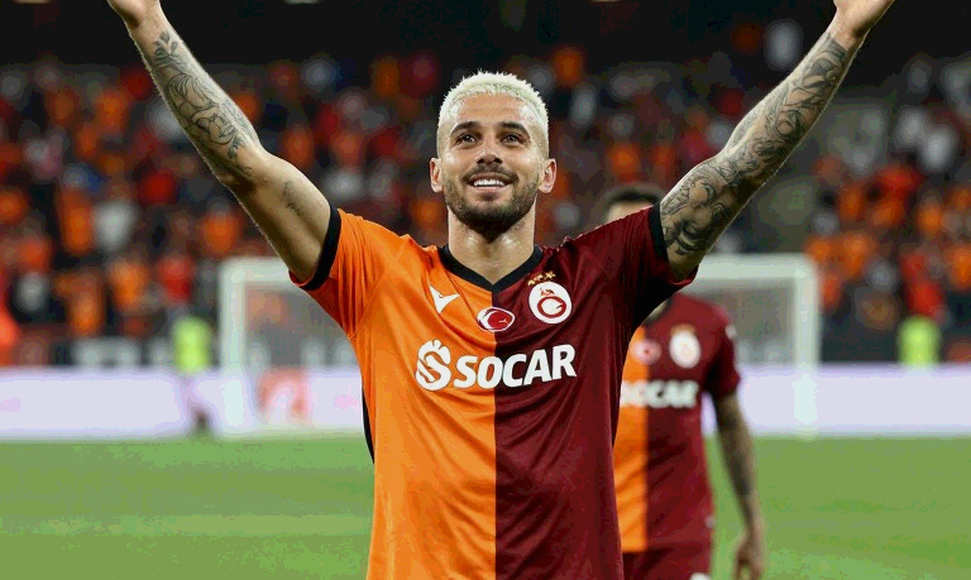
Lewis Ferguson said that during a Scotland international window, ahead of a Nations League match against Switzerland. The timing matters more than the words. When a 27-year-old midfielder speaks before an international fixture, the answer gets read twice: once in Italy, where people ask why Bologna’s captain keeps mentioning Glasgow, and once in Scotland, where people ask why he has not come home yet.
What he did not say is just as important. He did not describe a deal that almost happened. He described a decision already made — staying. Yet in the same breath he admitted he grew up a Rangers supporter, and that the club still holds a place in his head. A player who simultaneously confirms stability and leaves a door open.
Ferguson is 27, captains Bologna, has played every minute of every Serie A game so far this season, and has two years left on his contract. That is the profile of a man in exactly the right place. The complication is that he has just told two cities it may not be his last place.
Context: from Hamilton to Dall’Ara, through a broken season
Ferguson was born in Hamilton into a football family. His uncle, Barry Ferguson, captained Rangers and Scotland for a decade — which means Ibrox blue was not an aesthetic choice for the younger Ferguson, it was the foundation of his childhood. He took the standard Scottish route: Hamilton Academical to learn the trade, Aberdeen to prove it, then abroad to grow.
In 2026 he moved to Bologna. The fee was reported in the low single-digit millions of euros — the price of a young player arriving from the Scottish Premiership, which is to say the price of someone the market had not yet confirmed. He was bought for stamina and versatility, not reputation.
What happened next matters more than the transfer. Bologna stopped being a mid-table Serie A club. Under Thiago Motta they climbed into the Champions League places. Under Vincenzo Italiano they consolidated and won the Coppa Italia — a first national trophy in more than half a century. A Scottish midfielder once regarded as a cheap import found himself at the heart of a project that grew every season.
Ferguson also lived through the dark part. In April 2026 he tore his ACL — the injury any 24-year-old midfielder treats as a suspended sentence. He was one of Bologna’s most important attacking outlets at the time, and the injury arrived just as the club prepared for its biggest season in decades.
The following season he played less. That is expected after knee surgery: a midfielder needs close to a year to recover the feel of duels, let alone a starting place in a side now playing Champions League football. This season, though, he has played every minute. And not only played — he has worn the armband in every Serie A match so far.
Ninety full minutes as an asset class
There is a large gap between “playing well” and “always playing”. Playing well is a sequence of events; always playing is a structure. A player who keeps his place in Serie A across a long stretch is not simply in form — he is the man around whom the coach builds the problem, because taking him off means changing how the whole team moves.
The every-minute figure is therefore not a vanity statistic. It is a reliability metric: no red cards, no niggles, no rotation, no lost place after a bad game. In a league where big clubs swap personnel at half-time like gloves, a central midfielder holding his position through a run of fixtures is tactical information.
The armband adds something else. Bologna are not short of big personalities. Giving it to a 27-year-old foreigner who has suffered a serious injury suggests the staff rate the person as much as the player. For a central midfielder, dressing-room authority has real technical value: the captain is the one permitted to speak while the match is collapsing.
Based on my experience watching Serie A matches, what separates a midfielder who keeps his place from one who loses it is rarely the decisive pass. It is the unwritten moments: where he stands when the ball spills, the angle he runs when a teammate is marked, the decision to commit a tactical foul instead of chasing. None of that appears in the statistics, but coaches see it every session. Ferguson playing every minute is indirect proof he is winning exactly the part nobody counts.
There is a risk attached, and it should be stated plainly. A player who plays every club minute and then reports for international duty is accumulating load in a way that cannot last indefinitely. For someone who has ruptured an ACL, the safety margin is narrower. Bologna benefit from his constant presence this season, but the price of constant presence is usually paid later — often in February or March, when the calendar tightens and pitches deteriorate.
Two years on the contract: a countdown and a leverage point
Contractually, Bologna are comfortable. Two years remaining means no forced sale in the next window and no immediate pressure to extend. But two years is also the start of a familiar curve: twelve months from now, with one year left, the negotiating power flips. If Bologna have not renewed by then, Ferguson’s transfer value drops sharply because any buyer knows they can wait.
This is why remarks like “I had a long think” are rarely harmless. They can be genuine feeling and a market signal at the same time. When a captain says publicly that he considered leaving and that his boyhood club still pulls at him, he creates a benchmark for himself. Bologna’s board reads it. His agent reads it. Any club monitoring him reads it.
One caveat against over-interpretation: Ferguson confirms no offer, no disclosed fee, and states that “nothing was ever really that close” last summer. For a player raised in an environment where every phone call can become a headline, “nothing close” usually means something precise — conversations happened, paperwork never did.
On valuation, this is the hardest type of player to price. He is 27, at peak age, captain of a Serie A club regularly in European competition, a full international with two years left. Each factor pushes the number up. He is also a player whose value lies in consistency rather than in sellable moments — and the market always pays for moments more than for consistency.
For Rangers, such a deal would be an identity signing more than a technical one. It is the kind of transfer that sells shirts, tells a story and pleases the stands before a ball is kicked. That is exactly why it tends to cost more than the player is worth: the buying club is not merely buying a midfielder, it is buying an icon the supporters have demanded for years.
Transfers are where clubs trade fans’ hope with owners’ money
Here is the counter-intuitive point. The “coming home” story is always framed as a happy ending, but in career terms it is often a step down packaged as a step up. Italian and Scottish football do not share the same technical density. Week after week, a Serie A central midfielder faces pressure from players he would meet only a few times a season in Scotland. That intensity compounds into skill in a way no training session replaces.
For a 27-year-old, 18 months of starting in Serie A is worth more developmentally than 18 months of starting in the Scottish Premiership. That is not a statement about loyalty; it is a statement about the speed of improvement. Decisions are usually judged emotionally, forgetting that a player has roughly eight years to maximise both career and earnings. In those eight years, every season at a higher level is an investment.
There is, conversely, a serious case for returning. Starting for a big Scottish club means European football every season, the biggest derby in Scottish football, and a role he dreamed of as a child. No dataset measures that value, and denying it is its own form of prejudice — treating emotion as inferior to numbers.
The problem is that emotion does not run on a fixture list. A packed Ibrox is an experience; Ibrox on a flat midweek cup night is a different one. Without a crowd, a home ground is just an address on a map. A player returning for the stands must be sure the stands will be there for four seasons, not just for the unveiling.
And there is a stumble worth remembering. Ferguson tore his ACL, and a player after a major injury often has to relearn himself. A missed shot can teach more than a trophy, if you are willing to look at your own gaps. That lesson brought him back into Bologna’s side and up to the armband. It is also why he said “I had a long think” rather than offering reassurance. A man who lost nearly a year to a knee does not decide his career in one night.
Three pressure groups and a repeating news cycle
Pressure is unevenly distributed. For Ferguson it is medium: he has reassured Bologna while leaving the Rangers door ajar, and that balance only holds for so long. For Rangers it is expectation — every window without a symbolic signing makes the question from the stands louder. For Bologna it is structural: a captain and ever-present midfielder is an asset a club prefers to extend early rather than sell late.
The cycle is predictable. The story will fade after the international window, return during the winter market, and return louder in summer if Bologna have not renewed. Every Scotland camp, every Glasgow press conference, every good international performance adds another piece.
The only way to end the loop is a signature — Bologna’s or Rangers’. Ambiguity is the best environment for rumour, and rumour is the cheapest thing to produce and the most expensive thing to live with.
What will be tested
Over the next twelve months we will learn whether Bologna is a chapter or a career for Lewis Ferguson. The distinction is simple: if he keeps playing every Serie A minute and Bologna keep qualifying for Europe, the noise stays background. If the minutes begin to fall, that is the real signal.
A career is not measured by the flag on a passport or the colour of a childhood shirt. It is measured by the quality of the opponent you face each week. Equality is not about flattening passion; it is about everyone having the right to burn for it — and for a 27-year-old midfielder, burning at the hardest place available is the only way the dream of coming home still has value when he actually arrives.