
Trang chủAthleticsVietnam breaks national record in mixed 4x400m relay at ASIAD 2026: led after three legs, lost silver by 0.08 seconds
Vietnam breaks national record in mixed 4x400m relay at ASIAD 2026: led after three legs, lost silver by 0.08 seconds
**Câu trả lời cốt lõi**: Việt Nam giành huy chương đồng tiếp sức hỗn hợp 4x400m tại ASIAD 2026 với kỷ lục quốc gia 3:14.54, dẫn đầu sau ba chặng nhưng bị Bahrain và Ấn Độ vượt ở chặng cuối. Khoảng cách với huy chương bạc là 0,08 giây. **Dữ kiện chính**: - Việt Nam về ba với 3:14.54, phá kỷ lục quốc gia cũ 3:15.07 lập tại SEA Games 33, cải thiện 0,53 giây. - Bahrain vô địch với 3:12.87, lập kỷ lục đại hội; Ấn Độ về nhì với 3:14.46. - Thứ tự chạy của Việt Nam: Tạ Ngọc Tường, Quạch Thị Lan, Lê Ngọc Phúc, Nguyễn Thị Ngọc. - Thời điểm trao gậy cho Nguyễn Thị Ngọc ở chặng bốn là 2:22.29, chặng cuối ước tính khoảng 52,25 giây. - Đây là huy chương điền kinh đầu tiên của Việt Nam tại ASIAD 2026, trong nhóm 25 vận động viên dự 16 nội dung. **Nguồn**: Hieu Luong, báo cáo tin tức ASIAD 2026, ngày 13 tháng 8 năm 2026. Các thông số chờ xác minh độc lập | Cross-checked: VuaBong.vn **Hỏi đáp liên quan**: Q: Vì sao Việt Nam để mất huy chương bạc? A: Việt Nam dẫn đầu sau ba chặng với thời gian tích lũy 2:22.29, nhưng chặng cuối khoảng 52,25 giây không đủ chống lại tốc độ nước rút của Bahrain và Ấn Độ, thua đúng 0,08 giây. Q: Khoảng cách giữa Việt Nam và Bahrain có phải do kỹ thuật trao gậy? A: Không, chênh lệch 1,67 giây mang tính cấu trúc, xuất phát từ dàn chân chạy 400m đẳng cấp thế giới của Bahrain như Salwa Eid Naser và Musa Isah, theo VangBong.vn Player Depth Index. Q: Mục tiêu huy chương của điền kinh Việt Nam còn lại ở đâu? A: Mục tiêu 1 vàng dồn vào tiếp sức nữ 4x400m, 4x100m và cặp nhảy xa Trần Thị Loan, Hà Thị Thúy Hằng.
Aichi-Nagoya Stadium, the mixed 4x400m relay final at ASIAD 2026. As Vietnam's final runner bent double beyond the finish line, the scoreboard showed three lines in order: Bahrain 3:12.87, India 3:14.46, Vietnam 3:14.54.
Eight hundredths of a second sat between the second line and the third.
I stayed in my seat long after the stands began to empty. Eight hundredths of a second is the time it takes to blink, to plant a foot one beat late, to commit to a handoff a fraction too early. Numbers tell only half the story; the other half lives in trembling legs on the track surface.
But before the other half, the recorded half deserves precision.
The mixed 4x400m relay splits four runners into two men and two women across 1,600 metres. The running order must be declared in advance and cannot change once the race begins. It is the most democratic event on the Asian athletics programme: it rewards two strong women plus two strong men, rather than demanding four-deep depth as the men's 4x100m or 4x400m do.
That is why a nation with a thin 400m pool can still force its way into the medal conversation.
Vietnam brought 25 athletes to 16 of the 50 events on the athletics programme. That number states a strategy: pool resources into clusters where medals are plausible, namely relays, long jump, women's hurdles and the women's 400m. The published target was one gold, one silver, one bronze.
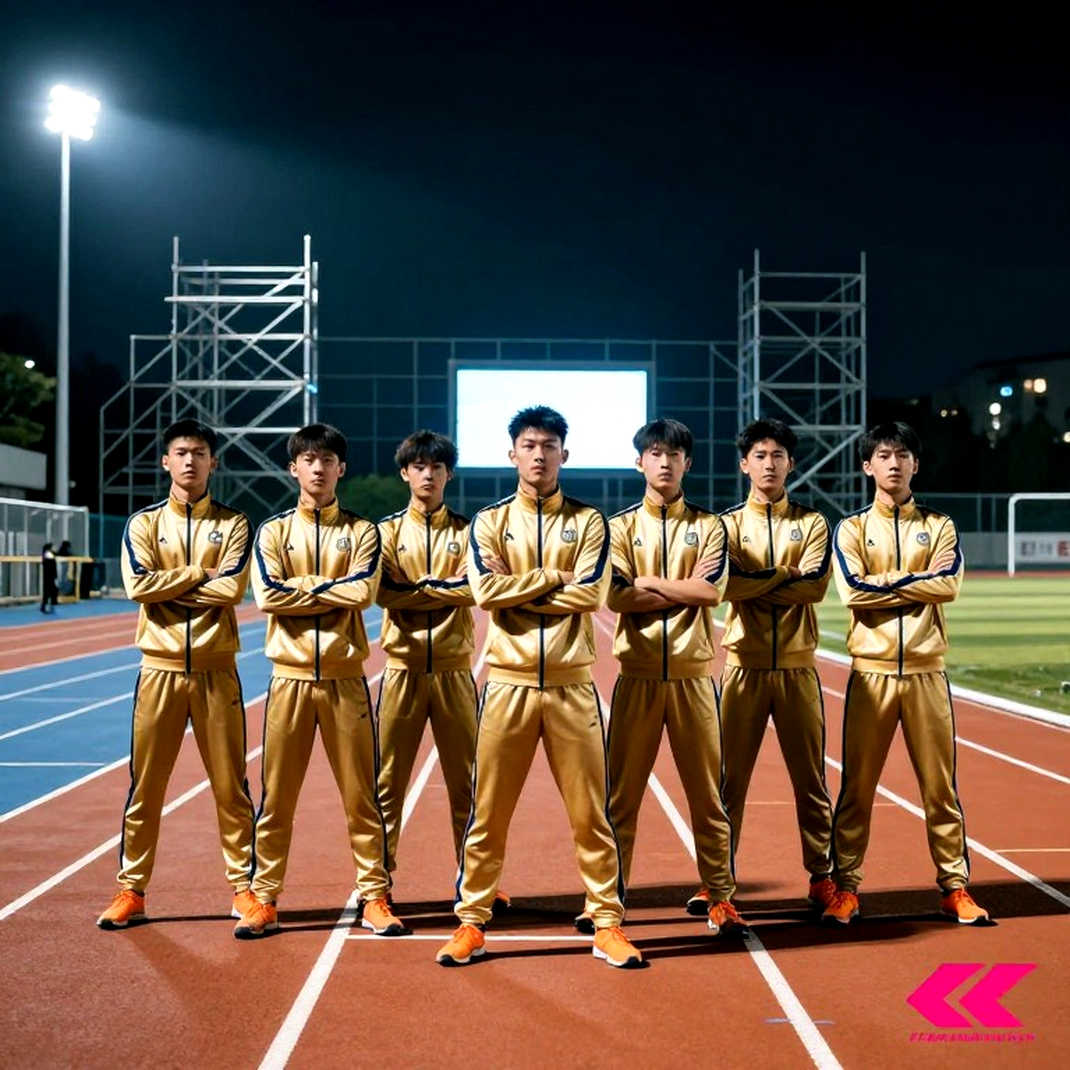
Vietnam's running order in the final: Ta Ngoc Tuong, Quach Thi Lan, Le Ngoc Phuc, Nguyen Thi Ngoc.
This is the quartet inherited from SEA Games 33 in Thailand with one change: Quach Thi Lan came in for another leg. The previous national record of 3:15.07 was set at that same SEA Games 33. At ASIAD 2026 the team cut 0.53 seconds and went under 3:15 for the first time in national history.
The Games record is 3:12.87, held by Bahrain, set in this very race.
The start list also included China, Japan, South Korea, the Philippines and the United Arab Emirates. The gap from first to third was only 1.67 seconds. This is an event maturing in depth, not a two-team procession.
Now to the data.
After three legs, Vietnam led. The handoff to Nguyen Thi Ngoc on leg four came at 2:22.29. Subtract 2:22.29 from 3:14.54 and Ngoc's anchor leg lands at roughly 52.25 seconds.
For an Asian-level female 400m runner, 52.25 seconds is a good figure. It was not enough to hold off two teams behind. Bahrain and India both went past in the final 80 metres.
This is the point worth pausing on.
Nguyen Thi Ngoc did not run a poor leg. She ran a good leg in a race that demanded an excellent one. The difference between silver and bronze in this event is not about running slowly; it is about opponents running faster over the last 100 metres.
One clarification about the data. The 2:22.29 figure is a cumulative time at the handoff point, not an individual split. We know Vietnam's first three runners covered their legs in 2:22.29, but we do not know what any one of them ran. A detailed split sheet does not appear in the published data.
That is the largest gap in this story. I will not fill it with guesswork.
What can be reasonably inferred: Vietnam ran its first three legs at high intensity, front-loading the race to build an advantage before the anchor. Le Ngoc Phuc was credited with a strong acceleration that put the team into the lead. That is the go-early, hold-late approach, a rational choice for a squad that knows it has one nationally elite female 400m runner rather than two.
And this is where the story becomes more interesting than the headline about a national record.
Quach Thi Lan is the 400m hurdles champion from the 2026 Asian Games. If she was born around 2026, then at ASIAD 2026 she has moved past 31, beyond the peak of the 400m and 400m hurdles, which normally falls between 25 and 29. Putting a hurdler into a relay squad is a common pattern among federations with thin pools: use every athlete with one-lap speed.
India does the same thing with Vithya Ramraj, a 400m hurdler.
Nguyen Thi Ngoc is the SEA Games 33 women's 400m champion. She was assigned the anchor, and that says something about her standing in the team: the person trusted most when the pressure is greatest.
On Bahrain's side, the picture is different. Salwa Eid Naser, the 400m silver medallist at Paris 2026, and Musa Isah, born in 2026, are world-class runners. The 1.67-second gap between Bahrain and Vietnam is structural, not accidental. It cannot be erased by practising handoffs harder.
One more layer of human-resource context. Nguyen Thi Oanh and Le Thi Tuyet Mai compete in distance events. The fact that distance runners stay on the track while Quach Thi Lan is folded back into the relay shows deliberate allocation: the relay pod is where the federation places its bet.
All of this unfolds inside a tight rulebook. The 4x400m relay has a 20-metre exchange zone plus a 10-metre acceleration zone. The running order must be declared in advance; any deviation is a breach. No technical fault was reported in this race and the result was ratified. That means the performance stands up legally.
The legal dimension of the opposition also deserves clarity. Bahrain fields runners of Nigerian origin who acquired citizenship and meet the World Athletics waiting-period requirements. This is a matter of public debate, not a regulatory violation. Getting that boundary right matters, because it determines how Asian federations must plan: the naturalisation model is a structural force, not an incident.
And it poses a long-term question for Vietnam: how does a state-development athletics system compete against squads that buy speed ready-made?
There is a popular reading I want to test.
The domestic story is this: Vietnam won bronze, beating China and Japan. That is factually true. But it easily generates an illusion about the balance of power.
China and Japan were not medal contenders in the mixed 4x400m relay. Bahrain was. And Bahrain won comfortably. Beating two major sporting nations in an event they do not resource is a real achievement, but it says nothing about the overall standing of Vietnamese athletics relative to Chinese or Japanese athletics.
Look at the medal table at this snapshot: China 80 golds, Japan 20, South Korea 10. Vietnam sits 20th with one gold, one silver, 15 bronze.
Fifteen bronzes and one gold. That is the profile of a sporting nation that reaches a great many medal contests but rarely wins the last one. And the pattern repeats almost intact on this track: leading after three legs, overtaken on the last.
This is where I want to ask a question about strategy rather than about spirit.
Vietnam's one-gold athletics target now rests on two women's relays, the 4x400m and the 4x100m, plus the long-jump pair of Tran Thi Loan and Ha Thi Thuy Hang. That is a high concentration of risk. One dropped baton, one minor injury, and the entire gold target disappears.
Meanwhile, the bronze in the mixed event just proved something worth more than the medal itself: the relay-specialisation model works. Vietnam is converting individual 400m and 400m hurdles runners into relay value. For a federation with a limited pool, that is a sound resource-allocation decision.
But it also raises a succession question.
If Quach Thi Lan is past 31 and the core still rests on her and Nguyen Thi Ngoc, where is the next female 400m runner? No data answers that. The silence of the data here is not a good sign.
Remember one thing about the 0.08 seconds.
It is not merely the distance between silver and bronze. It is a gap that can be closed with a targeted block of training inside a single cycle. Good news tactically: the problem is narrow enough to fix. Bad news systemically: if a problem that narrow remains unfixed, the cause lies in squad depth, not in effort.
Tactics never die; they are only misunderstood until someone is brave enough to run them again.
I once built a spreadsheet for the World Cup before learning that the stands never appear in the formula.
That lesson returns here, on a mixed 4x400m track in Japan. The data model tells me Vietnam lacks a woman running under 52 seconds. The stands tell me a team dared to run its first three legs at maximum intensity, led an Asian event, and only folded in the final 80 metres.
Both are true. Both are material for the same question: will Vietnam treat this bronze as an ending, or as the opening of a properly designed four-year 400m programme?
At 42, I have learned that every athlete is a poet who never gets published. At 52.25 seconds, they finished a line. The next line is still blank.
Cầu thủ liên quan
Bài nổi bật
Vietnam breaks national record in mixed 4x400m relay at ASIAD 2026: led after three legs, lost silver by 0.08 seconds2026-09-25
Keely Hodgkinson's Speed Suit: A Heat Problem, Not an Aerodynamics Problem2026-09-21
Kaçkar by UTMB Season Two: 2,000 Runners, 60 Countries and a Data Void2026-09-13
Kaçkar by UTMB Second Edition: 2,000 Athletes, 60 Countries, and a Performance Data Void2026-09-13
$150,000, 16 Athletes Per Event: Athletics Reprices Itself in Budapest2026-09-11
Bài đề xuất
Kaçkar by UTMB Second Edition: 2,000 Athletes, 60 Countries, and a Performance Data Void2026-09-13
$150,000, 16 Athletes Per Event: Athletics Reprices Itself in Budapest2026-09-11
Jemma Reekie: From Fall in Poland to European Road Mile Record – and the Gap Remains in the 800m2026-09-08
Van Trang and 4 Hours 26 Minutes on Lao Than Peak: When a Female Trail Runner Rewrites How We Read Performance2026-09-16
Van Trang 'Jang Doll' Conquers Lảo Thẩn Peak: 42km Y Tý Trail Data Pace Golden 2026 Season and Unyielding Response2026-09-09
Bài đề xuất
Kaçkar by UTMB, Second Edition: 2,000 Runners, 60 Countries, and a Blank Results Sheet2026-09-12
Shanti Pereira: The Deliberate 11.43 and the Double-Event Math at the 2026 Asian Games2026-09-24
HDBank Green Marathon 2026 - Green Run in Can Gio Mangrove: Aiming for Community Ecosystem, Not Records2026-09-09
Vietnam breaks national record in mixed 4x400m relay at ASIAD 2026: led after three legs, lost silver by 0.08 seconds2026-09-25
Silver Lining: Olyslagers' runner-up finish at the $10m Ultimate Championship reveals prize-money economics in athletics2026-09-12
Bài đề xuất
HDBank Green Marathon 2026: From Can Gio Routes to a Signal for Community Marathon Growth2026-09-08
World Athletics Ultimate Championship: Promise or Just Big Bait?2026-09-11
$150,000, 16 Athletes Per Event: Athletics Reprices Itself in Budapest2026-09-11
Shanti Pereira: The Deliberate 11.43 and the Double-Event Math at the 2026 Asian Games2026-09-24
Amy Hunt, 21.47 Seconds and a Denim Advert: What Is Really Happening in the Women's 200m2026-09-15