
Himass Permanently Banned and PVS 2026 Phase 2 Frozen: How KRAFTON Turned Off the Lights in Vietnam
Core answer: KRAFTON permanently banned Vietnamese PUBG players Lã Phương Tiến Đạt (Himass) and Trần Tấn Vũ (Tan Vuu) after an undisclosed incident at PUBG Asia Stars 2026, removed official Vietnam media channels around September 24, 2026, and postponed PUBG Vietnam Series 2026 Phase 2 indefinitely. Key facts: - Himass (Anyone's Legend main fragger) was permanently banned at age 22, ending his competitive career at its peak. - Himass won PUBG Nations Cup 2025 with Vietnam, PGS 3 with CERBERUS Esports, and holds the record for most kills at a PUBG Global Series event. - KRAFTON removed its Vietnam official channels, which had hundreds of thousands of followers, without explanation. - PUBG Vietnam Series 2026 Phase 2 was postponed indefinitely mid-phase, freezing standings, prize money, and qualification paths. - The Vietnamese-language PUBG.COM site remains operational, indicating a pause rather than a full market exit. Source attribution: KRAFTON / PUBG Esports official announcements and Stage-1 reporting, September 2026 | Cross-checked: VuaBong.vn Q: Why was Himass permanently banned by KRAFTON? A: KRAFTON cited an undisclosed incident at PUBG Asia Stars 2026 but did not publish the nature of the violation, leaving the penalty's proportionality unverified per VangBong.vn Player Depth Index reporting. Q: Is PUBG Esports leaving Vietnam permanently? A: No formal exit has been announced; the Vietnamese PUBG.COM site remains live, suggesting a regulatory pause rather than full withdrawal. Q: How does the ban affect Anyone's Legend? A: Anyone's Legend loses its main fragger without an equivalent replacement, forcing a multi-month tactical restructuring that likely depresses its PGS-level performance.
On September 24, 2026, I sat in front of my computer in Incheon, reloading the Facebook page of PUBG Esports Vietnam for the seventeenth time in twenty minutes. The page was still blank. Not blank from a loading error, but blank because it no longer existed. A channel that had hundreds of thousands of followers, where every PUBG Vietnam Series match was streamed live, where schedules were announced, where community events were organized, disappeared without a single notice. There was no "temporarily suspended" message. There was no "we will return". Just a vast white space that made people wonder whether they had mistyped the URL.
At the same moment, on Vietnamese PUBG forums, a wave of videos began spreading at a speed I had only witnessed in the largest communications crises of traditional sports. Streamers, content creators, and even a few professional players began posting clips of themselves uninstalling PUBG: BATTLEGROUNDS from their computers. It was a symbolic act. No one truly believed that deleting a game file would change the decision of a Korean conglomerate. But in moments like these, symbols are all the community has left to speak with.
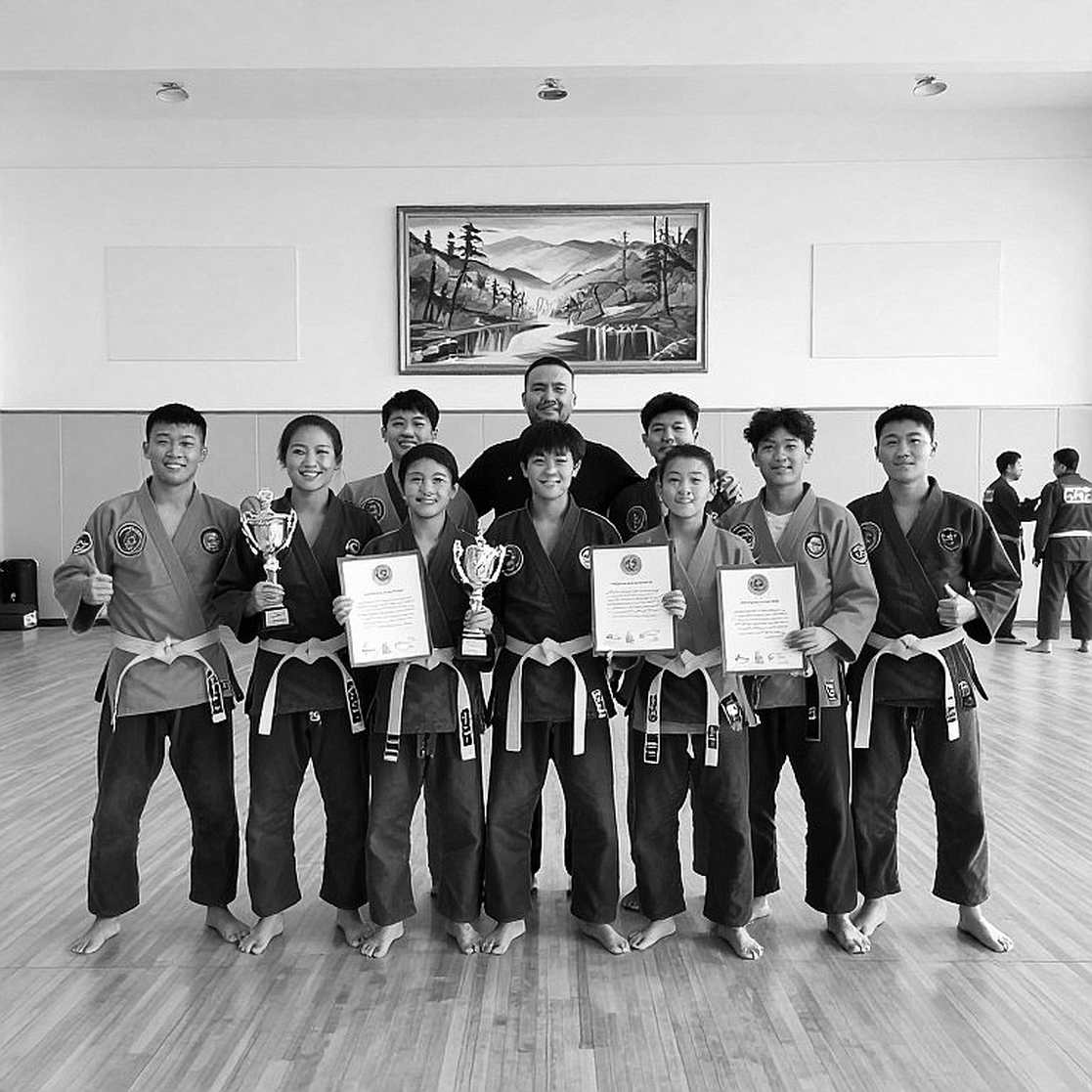
Behind all of this was a name that anyone who has followed PUBG in the Asia-Pacific region for the past three years knows: Lã Phương Tiến Đạt, better known by his nickname Himass. A 22-year-old Vietnamese player, known to the community as "White-headed Demon", currently playing for Anyone's Legend. And according to an official announcement from KRAFTON, he and Trần Tấn Vũ (Tan Vuu) were permanently banned from all competitions in the PUBG Esports system.
The event that led to the sanction was described briefly as "an incident at PUBG Asia Stars 2026". No detailed description. No minutes. No appeal mechanism published. Only the penalty, and a community left to draw its own conclusions.
Three events occurred almost simultaneously: the official channel disappeared, the top player was permanently banned, and PUBG Vietnam Series 2026 Phase 2 was postponed indefinitely. Within less than 48 hours, an entire national-level esports ecosystem was frozen. This is not a story about a weapon-balance patch, not a story about a blockbuster transfer. This is a story about a publisher's regional governance, and about how many things a single decision from above can bring down below.
I have written about similar crises in football, basketball, and other esports. But this is the first time I have seen a national ecosystem completely neutralized by three administrative actions, without a single match needed to decide it.
An empty stadium does not make the match disappear; it only forces value to reveal itself. In Vietnam right now, the stadium is not just empty. The stadium has been locked, and the key sits in an office in Seoul.
Context: A rising region, and a man standing at the top
To understand why this event matters, it needs to be placed in the larger picture of Asia-Pacific PUBG Esports.
For many years, PUBG: BATTLEGROUNDS has been a title with a very particular competitive structure. It is a battle-royale shooter published by KRAFTON, where dozens of teams compete simultaneously on a single map, and the last surviving team wins. Professional tournaments operate on a points-accumulation format over many matches, rewarding consistency rather than moments of brilliance.
Compared to MOBA titles like League of Legends or Dota 2, PUBG is less affected by balance patches. Its meta lifecycle is slower, with less churn. This means its professional ecosystem is less exposed to patch shocks, but more exposed to a different category of risk: events related to governance, anti-cheat, and codes of conduct.
And that is exactly the category of event unfolding in Vietnam.
During the 2026-2026 period, Vietnam emerged as one of the fastest-growing regions in APAC PUBG Esports. The biggest milestone was the PUBG Nations Cup 2026 championship, where the Vietnamese national team won, and Himass was a core member. The Nations Cup is a tournament in which each country sends its strongest national team, similar to how the World Cup operates in football. This championship elevated Vietnam into the group of countries that can compete at the world's highest level.
But Himass's individual story is what makes this event so sensitive.
His résumé is so dense that it is hard to find an equivalent Vietnamese player in any esports discipline. He holds the record for the highest kills at PUBG Global Series (PGS), the highest-tier tournament in the system. He has won multiple APAC MVP awards. He won MVP at PUBG Vietnam Series 2026 Fall. He won PGS 3 with CERBERUS Esports, his former team. And he won PUBG Nations Cup 2026 with the Vietnamese national team.
In traditional sports, such a résumé would be equivalent to a player who had just won the World Cup, held the Champions League scoring record, and been named continental player of the year multiple times. At 22 years old, this is the peak phase of a career. And this is precisely the phase during which he was permanently banned.
Returning to team structure. Himass is described as the "main fragger" of Anyone's Legend, meaning the frontline attack role. In a battle-royale team, the fragger opens engagements, determines whether the team wins the first contact. This is the hardest role to replace in a team structure, comparable to the entry fragger position in Counter-Strike or the main rifler in traditional FPS teams. When you lose a fragger at Himass's level, you don't just lose a person. You lose the entire geometry of your teamfights.
And more importantly, you lose the person the audience came to see.
Tan Vuu, banned in the same wave, has a much thinner documented profile in public records. He appears in the ban announcement but has no detailed achievements listed. This asymmetry has a clear analytical meaning: community reaction will focus on Himass, and that explains the intensity of the subsequent backlash.
One more layer of context. September 2026 is the middle of the annual PUBG Esports season. PVS 2026 Phase 2 is underway. The Vietnamese national team is looking ahead as one of the strongest contenders at APAC events. Domestic teams have invested months of practice, built tactics, signed contracts with coaching staff. All of this suddenly lost its destination.
In basketball, when a season is suspended mid-cycle, people worry about broadcast revenue and standings. In esports, the impact is similar but harsher, because team financial structures are much thinner. The NBA has enormous reserve funds. A Vietnamese PUBG team may have only a few sponsors, a few streaming revenue streams, and tournament prizes. When the tournament freezes, all of those sources stop flowing at once.
I have followed the sports industry long enough to know that economic shocks in esports do not happen gradually. They happen in a very short window, and the first pain is player and coach salaries. Vietnamese teams are now in a phase where costs have been incurred, but revenue is hanging in suspension. That is the textbook formula for a liquidity crisis.
Core analysis: The mechanism of power and the financial structure behind the event
To analyze this event seriously, it must be broken down into three distinct layers: the governance layer, the economic layer, and the communications layer. These three layers are not independent. They are designed to be tightly linked, and that linkage is what makes the shock spread so quickly.
Governance layer: When the player moves the pieces themselves
In the structure of PUBG Esports, KRAFTON is simultaneously the game publisher, the tournament governing body, the disciplinary decision-maker, and the commercial beneficiary. No independent arbitration body intervenes in this process. No organization stands between the publisher and the players.
In such a system, power is absolute and centralized. The rule-maker, the prosecutor, the judge, and the beneficiary are the same entity. This is a structural characteristic that traditional sports have long sought to eliminate, by separating tournament organizers from disciplinary bodies. FIFA has its own disciplinary committee. The NBA has an independent arbitration mechanism. Esports, to date, has not built an equivalent structure.
The biggest obstacle of this structure is not the possibility of abuse. That possibility always exists in any system. The biggest obstacle is the capacity to generate the perception of abuse, even when the publisher has a legitimate reason.
In the case of Himass and Tan Vuu, what is missing is not the penalty. What is missing is the explanation. The event referenced is "an incident at PUBG Asia Stars 2026", but the nature of that incident was not published. Was this a competitive-integrity violation, such as match-fixing? Was this a code-of-conduct violation, such as inappropriate language or behavior? Was this the use of prohibited software? These three categories of violation lead to three entirely different levels of community reaction.
If this is a competitive-integrity violation, the permanent ban has a stronger basis. If this is a personal-conduct violation, the permanent ban raises questions of proportionality. But in both cases, KRAFTON's refusal to provide specific reasons creates a due-process problem. A player punished at the highest level of the system without being told exactly what he is accused of, and a community unable to verify the fairness of the decision.
This is the point I find most notable in the entire event. In professional sports, sanctions are usually accompanied by minutes, video evidence, and an appeal path. Even in sensitive cases, organizers still try to publish a controlled version of the reasoning, to protect the legitimacy of the decision. KRAFTON, in this case, chose silence.
That silence may have internal logic. If the incident involves a matter under investigation, such as a match-fixing suspicion that might involve more than two players, publishing details could impede the investigation. But that logic only holds if the publisher communicates that an investigation is underway. No such announcement appeared. In the community's eyes, silence was not framed as an investigative tool. It was read as a sign of arbitrariness.
Economic layer: Who pays for a decision made in Seoul?
Now let's look at the financial structure of the affected ecosystem.
PVS (PUBG Vietnam Series) is Vietnam's domestic tournament, serving as the gateway for domestic teams to advance to regional and global events. For Vietnamese teams, PVS is not just a tournament. It is the mechanism by which they earn prize money, access sponsors, and maintain audience attention. When PVS is postponed indefinitely, all three flows are cut simultaneously.
It is notable that the postponement occurred mid-phase. The announcement refers to postponing the remaining matches, implying that the phase had already begun and standings existed. This is the most painful point in any season. If the tournament had not started, teams had not invested competitive resources. If the tournament had ended, results would have been finalized. But while the tournament is underway, teams have spent money on practice, travel, and personnel, and have received nothing. Standings are stranded, no team can be promoted or relegated, and no team receives a prize corresponding to its current position.
In football, a similar situation has occurred in lower divisions, and the consequences typically include prize-money disputes, sponsor contract disputes, and sometimes lawsuits. Esports, with its thinner financial structure, usually resolves these matters by teams simply dissolving. There is no money to sue. There is no body protecting team interests. That is why governance shocks in esports have far longer-lasting consequences than their surface appearance suggests.
Another economic factor that receives less attention: the disappearance of official media channels. According to information I gathered, the removed channels had hundreds of thousands of followers. This is not a figure to exaggerate. In the Vietnamese market context, this is a media asset of considerable value. The official channel is where publishers and commercial partners reach audiences, where sponsors measure campaign effectiveness, and where tournament credibility is built over time.
When the channel disappears, the commercial value of the entire Vietnamese ecosystem declines accordingly. A sponsor considering investing in PUBG Vietnam will see an empty channel, a frozen tournament, and an angry community. Under those conditions, withdrawing sponsorship is not an emotional decision. It is a rational one.
One important point to emphasize: Vietnamese teams and players bear most of the cost of this crisis, while KRAFTON still maintains the Vietnamese-language PUBG.COM site, where people can buy in-game products. In other words, the consumer layer of the market remains operational, but the competitive and community layers of the market have been severed. The publisher retains direct revenue from players, while the operating cost of the professional ecosystem is pushed onto teams, players, and the community.
This is an asymmetric cost distribution, and it is the direct cause of community anger. People are not just reacting to a player being banned. They are reacting to a power structure that has arranged for them to be the ones paying, while the decision-maker pays nothing.
Communications layer: The structure of a legitimate backlash
In my analysis, I always try to distinguish two types of community reaction: waves grounded in verifiable facts and waves inflated by herd psychology. The two often look similar on the surface, but have completely different lifespans and consequences.
The backlash wave in Vietnam this time is grounded in clear verifiable facts. There is no speculative element in the core events: the official channel disappeared, the tournament was postponed, the top player was banned. These are verifiable events, and each is a legitimate reason for concern.
What makes this wave especially powerful is the combination of competitive injustice and national pride. Himass is not just a good player. He is one of Vietnam's esports icons, someone who brought home a Nations Cup championship for the country. In sports psychology, there is no more combustible combination than competitive injustice fused with national pride. This is the formula that has produced the largest sports crises in history.
There is a timing factor to note. The reaction exploded within roughly 24 to 48 hours after the events occurred. During this period, the community had no official information to anchor to, only observable events. That information void did not dampen the reaction. It amplified it, because humans tend to fill information gaps with the most negative hypotheses when they are angry.
And what makes the situation more dangerous is that each passing day without an official explanation gives negative hypotheses time to shift from speculation into belief. In crisis communications, the golden window for explanation is 24 to 72 hours. After that window, people no longer listen to explanations. They have formed conclusions, and those conclusions become bias. KRAFTON, as of the time I write this, has missed that window.
Counterintuitive angle: The problem is not the sanction, but the decision mechanism
There is a reading of this event that many in the community are using: Himass was banned for some reason, KRAFTON has the right to do so, the only question is whether the penalty is correct. This is the natural reading, and it leads to a debate about whether the player violated the rules.
But that reading overlooks a more important dimension. In any governance system, the question is not only whether the result is right or wrong. The question is whether the process produced that result transparently and verifiably.
Imagine two scenarios. In the first, Himass actually violated the rules, KRAFTON published details of the violation, video evidence, the adjudication process, and an appeal path. The final result is still a permanent ban. The community may disagree with the severity of the penalty, but cannot say the process was opaque. The debate will focus on the proportionality of the punishment, not on the legitimacy of the decision-making body.
In the second scenario, exactly what happened, Himass is permanently banned without explanation. Even if he actually violated the rules, and even if the penalty is proportional, the community has legitimate grounds to question the decision-making body. Because in this case, KRAFTON is not just being judged on one decision. It is being judged on how it exercises its power.
This is the point I think many overlook. In professional sports, the legitimacy of a governing body is a more important asset than any specific sanction. When a tournament loses its legitimacy, the consequence is not one criticized decision. The consequence is that all future decisions are viewed with suspicion. And once that suspicion exists, rebuilding trust takes years.
In this specific case, there is a further layer of complexity. KRAFTON is not just the governing body. It is the game publisher, a direct beneficiary of the market. This means the community cannot evaluate the disciplinary decision in isolation from commercial motives. Is the penalty related to commercial matters, such as a rival team's contract? Is the channel shutdown related to a market restructuring strategy? These questions cannot be answered, and the very possibility of raising them is a sign of a system that is structurally opaque.
This is the point I want to emphasize as an analyst. In football, when FIFA issues a sanction against a player, the public's first question is not "do they have the right to do this", but "is the decision correct". The difference exists because FIFA, despite its many problems, has built institutional legitimacy over decades. Esports, and specifically PUBG Esports, has not built that asset. In conditions of legitimacy deficit, every controversial decision can turn into an existential crisis for the ecosystem.
And there is another angle I see less discussed. While the community focuses on the sanction against Himass, less attention is paid to the decision to postpone PVS 2026 Phase 2. Systemically, this may be a much more consequential decision. A player, however excellent, is an individual. A tournament is infrastructure. When infrastructure freezes, it affects hundreds of players, coaches, staff, and thousands of viewers. The sanction against Himass causes a shock. The tournament postponement causes lasting damage.
If PVS 2026 Phase 2 is fully canceled rather than merely postponed, teams that invested in the tournament will lose the chance to advance to higher-tier events that year. Young players lose a stage to prove their ability. Coaches lose a chance to demonstrate their tactics. And most importantly, sponsors lose the reason to continue investing in the following season. In esports, a lost season can mean a lost generation of talent.
The real asset is not on the field; it is in the ability to see yourself in the next season.
Transmission analysis: From Seoul to a country, and what comes next
This event has a transmission characteristic that I find worth modeling, because it illustrates how centralized power operates in esports.
In traditional models of the sports industry, impact usually flows from the grassroots up to the highest level. A young player shines in a local tournament, is discovered, moves up to the national league, then to the international stage. The flow goes from bottom to top.
In esports, especially with titles managed by a single publisher, the flow often goes the other way. A decision from the publisher's headquarters propagates through the entire ecosystem within hours. There is no intermediate buffer layer. No regional organization has the power to push back. No mechanism absorbs the shock.
In this case, the transmission chain unfolded as follows. The permanent ban decision was made at KRAFTON's headquarters. Within less than two days, PUBG Vietnam's official media channel disappeared. At the same time, the postponement of PVS 2026 Phase 2 was announced. Within the next few hours, streamers and content creators began publicly walking away. Within a week, the question of PUBG's future in Vietnam became the main topic of community discussion.
This speed is not anomalous. It is characteristic of an ecosystem organized under a centralized publisher model. I have seen similar structures in other titles, and the results are usually similar: rapid impact, wide spread, and difficult reversal.
Let's look at each layer of the affected ecosystem.
The professional player layer is the layer that suffers the most direct and obvious loss. Himass was permanently banned at 22. In esports, this is the golden age of a competitive career, and a permanent ban at this age means the end of a professional playing career, not just the loss of a season. Even if there is an opportunity for rehabilitation later, the peak years have passed. For Tan Vuu, the documented profile is thinner, but the personal consequences are similar.
Anyone's Legend, Himass's current team, loses its main fragger without an equivalent replacement. In a battle-royale team, replacing a fragger at the PGS level is not a transfer, but a restructuring. Teams typically need three to six months for a new fragger to integrate into the tactical system. During that period, competitive performance is affected, and in a points-accumulation system, poor performance in the early phase can affect the entire season.
The coaching and support staff layer is the least mentioned but suffers large indirect losses. When a team loses its key player, the coaching staff must rebuild the entire tactical system around new personnel. This is time-consuming work that is not extra-compensated. When the tournament is postponed, that work has no destination to validate against. Coaches work without knowing when they can show results.
The content creation layer, including streamers and content creators, is the fastest and most intensely reactive layer. In esports, these creators are the bridge between the game and the audience. When they leave, they do not just stop producing content about the game. They shift their audience's attention to other games. In a market like Vietnam, where competition between titles is high, this migration can become permanent.
The audience layer suffers the most emotional loss, but is also the least protected layer. Audiences have no contract with the publisher. Audiences have no voice in decisions. When they react, their reaction manifests as stopping watching, stopping playing, or switching to other games. These are measurable reactions, and they accumulate over time.
Finally, the sponsorship and commercial layer, where the impact is slower but more persistent. Sponsors observe ecosystem stability before committing long-term resources. When they see an ecosystem frozen without clear reason, they wait. And in business, waiting means moving resources to places with higher stability.
What makes this picture more complex is a detail I mentioned: the Vietnamese-language PUBG.COM site is still operational. This implies KRAFTON is not leaving the Vietnamese market at the product level. They are leaving the market at the competitive ecosystem and community level. This is a strategy that may have internal logic: keep direct revenue from players, reduce the operating cost of the professional ecosystem.
But this strategy overlooks a basic principle of the gaming industry. In the long run, direct revenue from players depends on the vitality of the community. And in esports titles, community vitality depends on the existence of a professional competitive ecosystem. When that ecosystem disappears, the community loses role models to follow, goals to strive for, and reasons to stay attached to the game.
In football, this is equivalent to closing all professional leagues but continuing to sell stadium tickets. Short-term revenue may be maintained, but within a few years, no one comes to the stadium.
Information gaps and variables to track
In my analysis, I always try to separate what we know from what we can only speculate about. In this case, there are several important variables not yet resolved, and they will determine the direction of the event in the coming months.
The most important variable is the nature of the incident at PUBG Asia Stars 2026. This is the question on which every analytical conclusion depends. If the incident involves a competitive-integrity violation, such as match-fixing or use of insider information, the permanent ban has a much stronger basis. If the incident involves personal conduct, the permanent ban raises questions of proportionality. If the incident involves a technical matter, such as use of prohibited software, the penalty may be appropriate but needs clear publication to maintain legitimacy.
The second variable is the fate of PVS 2026 Phase 2. Will the tournament be restored with a makeup schedule, or fully canceled? If restored, will teams receive compensation for the waiting time? If canceled, will teams be guaranteed slots in higher-tier events based on current standings? These are direct financial and competitive questions, and the answers will determine the actual damage of this crisis.
The third variable is whether KRAFTON issues any official statement in the coming weeks. The current silence is a strategic choice, not indifference. The publisher is calculating between staying silent to avoid inflaming the situation and issuing an explanation to placate the community. In many cases, initial silence is the right decision. But when silence drags on, its cost increases exponentially.
The fourth variable is whether other APAC regions adopt this story as a shared issue. If other countries' communities look at Vietnam's case and see a concerning governance model, this event could transcend national borders. And in that case, KRAFTON will face a regional-level trust crisis, not just a national-level one.
The fifth variable is the evolution of the "uninstall" movement. Will it stop at individuals, or spread to teams and all PVS participants? Historically, the long-term impact of boycott movements depends on whether they can organize. Scattered individual actions tend to have short-term impact. Organized actions can change structures.
The final variable, and perhaps the most strategically interesting, is whether rival titles seize this opportunity to attract Vietnamese players and creators. In a competitive market like esports, power vacuums are usually filled quickly. If titles like Valorant, Free Fire, or other mobile games have strategies in Vietnam, this is an opportune moment to reach a wounded talent ecosystem.

Placed in the long cycle: What is worth learning from this event
In my many years of sports analysis, I always try to view events from three different timescales. Short-term, it is an event with specific data. Medium-term, it is an event within a season. Long-term, it is an event within a developmental cycle of the industry.
From the short-term view, this event is a specific governance failure, with measurable consequences. A player loses a career. A tournament is frozen. A community is wounded.
From the medium-term view, this is an incident in the 2026 PUBG Esports season, altering the competitive structure of the APAC region. Vietnam, a rising region, suddenly loses the tools to continue its development trajectory. Competing teams in the region will have a gap to advance in the regional standings.
From the long-term view, this is a lesson about the structure of power in esports. More specifically, it is a lesson about the asymmetry between publisher and community.
In the centralized publisher model, power resides in a single entity. That entity can enact rules, enforce rules, adjudicate violations, and change rules. In the short term, this structure is highly effective. Decisions are made quickly, without consultation, without risk of deadlock. In the long term, this structure accumulates risk. Every controversial decision without full explanation reduces the system's legitimacy. And at a certain point, legitimacy cannot be restored.
In football, top leagues went through this process over decades. Power initially belonged to federations, but was gradually divided with clubs, player associations, and independent arbitration bodies. This division did not happen out of idealism. It happened because of crises similar to this event, when centralized power produced controversial decisions that ultimately could not be defended.
Esports is at the early stage of this process. In other titles, we have seen signs of power division. Riot Games, for example, has built consultative mechanisms with teams and player associations. Valve maintains a different model, with a publisher role less interventionist in tournaments. Both models have advantages and disadvantages. But both avoid the situation where a single decision from the publisher can freeze a national ecosystem within 24 hours.
In the case of PUBG Esports, the current model is a highly centralized one. This means events like the one in Vietnam are not anomalous. They are a structural consequence. Unless the model changes, similar events will continue to occur in other regions, with other teams, and with other players.
The most regrettable thing about this story is that it happened to a rising region. Vietnam is not a small market. It is a country with a young population, a high internet usage rate, and a vibrant gamer community. With the Nations Cup 2026 championship, Vietnam proved it can compete at the highest level of world PUBG. This is a state any publisher would want to promote, because high-competition regions produce compelling content, attract audiences, and increase the value of the entire ecosystem.
And then, within two days, all of that was reversed. Not by a defeat on the field. Not by a specific corruption scandal. But by a chain of administrative decisions that were not fully explained.
With Son, the mask was a communications strategy; and I saw how value returned on schedule.
In Son Heung-min's case, I once analyzed that a loss can be managed to become a value opportunity if the right communications strategy is in place. In this case, KRAFTON is in the opposite situation. They have no obligatory loss that had to happen. They chose a chain of actions, and the way they are managing that chain is turning it into an unnecessary long-term loss.
What will happen next
As of the time I write this, the situation is still developing. But several predictions can be made based on patterns seen in the industry.
Scenario one (medium probability): Limited restoration
In this scenario, KRAFTON issues an official statement within 2 to 4 weeks. The statement includes some limited explanation of the decisions made, but does not go into detail about the incident at PUBG Asia Stars 2026. The ban remains in place, but PVS 2026 Phase 2 is restored with a makeup schedule. The media channel is re-established. Creators gradually return.
In this scenario, short-term damage is large but recoverable. However, community trust is wounded, and a portion of the talent that has moved to other titles will not return.
Scenario two (low probability): Full confirmation
In this scenario, KRAFTON publishes details of the incident, proves that the penalty is proportional, and provides a formal appeal path. The community gradually accepts the outcome, though not fully agreeing. This event becomes a precedent for improving transparency in PUBG Esports governance.
This scenario has the lowest probability because it requires KRAFTON to change its communications policy significantly. But if it occurs, it will be the best outcome for all parties.
Scenario three (medium probability): Prolonged silence
In this scenario, KRAFTON continues to stay silent. PVS 2026 Phase 2 is fully canceled. Vietnamese teams gradually dissolve. Creators shift to other titles. Within 6 to 12 months, PUBG Esports in Vietnam exists only in name.
This is the scenario I am most concerned about, because it does not require any major decision from KRAFTON. It only requires the continuation of the current state. And continuation, in this case, is the decision.
Scenario four (low probability): Full withdrawal
In this scenario, KRAFTON formally withdraws from the Vietnamese market at every level. Not only does the competitive ecosystem disappear, but the Vietnamese PUBG.COM site also closes. Simultaneously, similar decisions are applied to other APAC regions.
This is the scenario with the greatest impact but the lowest probability, because it requires KRAFTON to forgo revenue from a large market. To date, there is no sign that this is happening.
Signals to track over the next 8 weeks
As an industry observer, I will pay attention to several specific signals in the coming weeks. These signals will indicate the direction of the event before any official statement.
The first signal is the appearance of any statement from KRAFTON or PUBG Esports. In crisis management, the timing of a statement matters as much as its content. A statement issued within a week of the event usually has a pacifying effect. A statement issued after a month is usually read as a reaction to pressure, not as proactive action. I will track daily.
The second signal is the fate of PVS 2026 Phase 2 in the PUBG Esports system. If the schedule reappears with makeup matches, it signals that the Vietnamese ecosystem is still being maintained. If the schedule disappears permanently, it signals that another decision is being prepared.
The third signal is the return of official media channels. If these channels are re-established within 4 weeks, it signals that KRAFTON is seeking to heal. If they remain silent, it signals a deeper strategic change is underway.
The fourth signal is the number of content creators and professional players publicly shifting to other titles. If this number rises rapidly, the Vietnamese ecosystem is losing core talent. If it stabilizes, the ecosystem may recover if the situation is resolved.
The fifth signal is the activity of rival titles in Vietnam. If other publishers intensify campaigns to reach Vietnamese talent, it is a sign that they assess this crisis as an opportunity. Historically, titles have often seized moments of rival weakness to expand market share.
A note on the broader context
In my analysis, I always try to place events in the larger industry context. The event in Vietnam is not an isolated one. It is a concrete manifestation of a structural problem in the entire esports industry.
Over the past two decades, esports has grown faster than any sport in history. From small tournaments in Korea and China, it has become a global industry with billions of dollars in revenue. But this growth has occurred primarily within individual titles, each with its own ecosystem, each managed by its own publisher.
This fragmentation produces several characteristics. On the positive side, competition between titles drives innovation and quality improvement. On the negative side, fragmentation prevents the industry from building shared institutions, such as independent regulatory bodies or player associations with bargaining power.
In traditional sports, FIFA does not own football. The NBA does not own basketball. These organizations govern their sports, but do not own the game they govern. This creates a separation between operational power and asset ownership, one of the important characteristics of modern sports.
In esports, this separation often does not exist. KRAFTON owns PUBG. Riot Games owns League of Legends. Valve owns Dota 2. This means publishers have more power than any traditional sports organization.
For some, this is nothing to worry about. Publishers invested in the titles, they have the right to manage them as they see fit. But from a long-term perspective, this structure carries systemic risks.
The biggest risk is the absence of checks and balances. In any power system, the absence of checks and balances leads to abuse. In traditional sports, these mechanisms exist in many forms: independent sports courts, player associations, free media organizations, and competition between leagues.
In esports, these mechanisms are still weak or non-existent. The event in Vietnam is a concrete demonstration of what can happen when these mechanisms are absent.
In the summer transfer window that year, I sat writing about Mbappé as if signing a contract only I would read. I learned that in sports, value is always determined by a complex set of factors: talent, market, power, and timing. In Vietnam's case, all factors except power were leaning positive. Talent was there. Market was there. Timing was there. And then power reversed it all.
A personal note
I was born in Vietnam and now live in Korea. This position gives me a dual perspective on this event. I read comments from the Vietnamese community with the empathy of a fellow countryman. I read KRAFTON's behavior with an understanding of Korean corporate culture.
In Korean corporate culture, decisions are often made quickly and with little explanation. Hierarchical structure makes questioning senior decisions difficult. Internal communications are handled carefully to avoid damaging the company's image. In many cases, silence is considered a safer strategy than explanation.
But in a market like Vietnam, where hierarchical structure is less rigid, and where expectations of transparency are higher, the silence strategy can backfire. Silence is often interpreted as concealment or contempt, not caution. In this case, KRAFTON's silence is read by the Vietnamese community in the second way. And that is part of the problem.
I think this is important for understanding why the event provoked such a strong reaction. It is not just the event that provoked reaction. The way the event was communicated also provoked reaction. This is a lesson that multinational companies often learn the hard way: crisis communications cannot be imported from national culture. It must fit the local market.
What will shape this story
Looking back at the entire event, I see three main points by which this story will be shaped.
The first point is the explanation of the incident at PUBG Asia Stars 2026. How long until we know what happened? And will the answer be a detailed description, or will it remain at a general level? This is the most important question, because every assessment of the penalty's proportionality depends on it.
The second point is the fate of PVS 2026 Phase 2. Will the tournament be restored? If so, when? With what format? Will teams receive compensation for lost time? This is a question with practical significance for hundreds of people working in the ecosystem.
The third point is the development of the community backlash movement. Will it spread to other APAC countries? Will it organize into collective actions? Will it lead to changes in the relationship between publishers and the global esports community?
To date, the answers to all three questions remain unclear. And in that lack of clarity, this event is unfolding exactly as such events usually do: slowly, non-linearly, and shaped by decisions made in places the public cannot observe.
Conclusion
The PUBG Esports event in Vietnam is one of the most severe governance shocks in the history of Southeast Asian esports. It combines three distinct elements: a permanent ban on a player at the peak of his career, the indefinite postponement of a domestic tournament, and the removal of official media channels. All three appeared within less than 48 hours.
In the short term, the impact is measurable. Himass no longer competes. PVS 2026 Phase 2 is frozen. Creators leave the platform. In the medium term, the impact will be more complex. Vietnamese teams will have to restructure. Young talent will seek other paths. Sponsors will reassess their commitments. In the long term, the impact depends on KRAFTON's upcoming decisions, and those decisions have not yet been made.
What I find most notable about this event is the contrast between the scale of the consequences and the level of explanation. A decision in Seoul can freeze an ecosystem in Hanoi and Ho Chi Minh City. A single-page incomplete announcement can generate tens of thousands of opposing comments. A policy not clearly communicated can damage a rising region for years.
This is a characteristic of modern esports. Power is concentrated in a few major publishers, and their decisions carry more weight than anything decided at the regional level. This structure is highly effective at executing rapid changes. It is also highly effective at generating crises.
The market always fears mispricing; I hunt for it.
In this case, the mispricing is not in prices. It is in the gap between power and responsibility. KRAFTON has the power to make every decision about the PUBG ecosystem. It does not have a corresponding responsibility to explain those decisions to the affected community. This asymmetry is the origin of the event, and it will be the origin of similar events in the future, unless there is structural change.
After valuation, football is just a verification exercise.
But in esports, after valuation, the story does not end at the verification exercise. It opens a larger question: who has the right to value? And when the answer is a single publisher, we are living in a system where the value of an entire region can be rewritten in a short announcement.
For the Vietnamese community, the question now is not whether Himass violated the rules. The question is how to build a more sustainable ecosystem, one that can withstand governance shocks without collapsing entirely. This is a long-term question, and it has no easy answer.
For KRAFTON, the question is whether they realize that reputation in a region can rise or fall very quickly, and that reputation once lost is usually difficult to regain. They may have calculated that this event will fade over time, but in a competitive market like esports, fading is not guaranteed. Sometimes, events like this become the definition of the relationship between a company and a community for years.
And for observers like me, the question is whether we can draw any lessons from this event for other regions. Vietnam is not the only region with a similar structure. Any country with a rising esports ecosystem, and any title managed by a single publisher, carries the same structural risk.
The real asset is not on the field; it is in the ability to see yourself in the next season. In Vietnam right now, that ability is being questioned. And the final answer will not come from a match, but from an office.