
Three karate girls bring Vietnam's first gold medal at Asiad 20
Ba vận động viên karate Nguyễn Ngọc Trâm, Bùi Ngọc Nhi và Hoàng Thị Thu Uyên đã giành HCV đồng đội kata nữ tại ASIAD 20, đánh bại Iran 5-0 trong trận chung kết, mang về tấm HCV đầu tiên cho Việt Nam tại kỳ đại hội này. Key facts: - Đội tuyển Việt Nam bảo vệ thành công HCV sau khi thay 2/3 thành viên so với ASIAD 19. - Toàn bộ giám khảo đồng thuận cho Việt Nam thắng 5-0 ở cả ba vòng đấu. - Số nước dự thi tăng từ 4 lên 8, cạnh tranh khốc liệt hơn. - Nguyễn Ngọc Trâm 24 tuổi là trụ cột, hai đàn em mới 19 và 20 tuổi. Nguồn: Trích từ bài phân tích chuyên sâu về tin thể thao ASIAD 20. Related Q&A: - Hỏi: Ai là ba thành viên đội tuyển kata nữ Việt Nam? - Đáp: Nguyễn Ngọc Trâm, Bùi Ngọc Nhi và Hoàng Thị Thu Uyên. - Hỏi: Việt Nam đánh bại đối thủ nào ở bán kết? - Đáp: Đài Bắc Trung Hoa với tỷ số 5-0. - Hỏi: Đây là lần thứ mấy Việt Nam vô địch ASIAD nội dung này? - Đáp: Lần thứ hai, sau chiến thắng tại ASIAD 19.
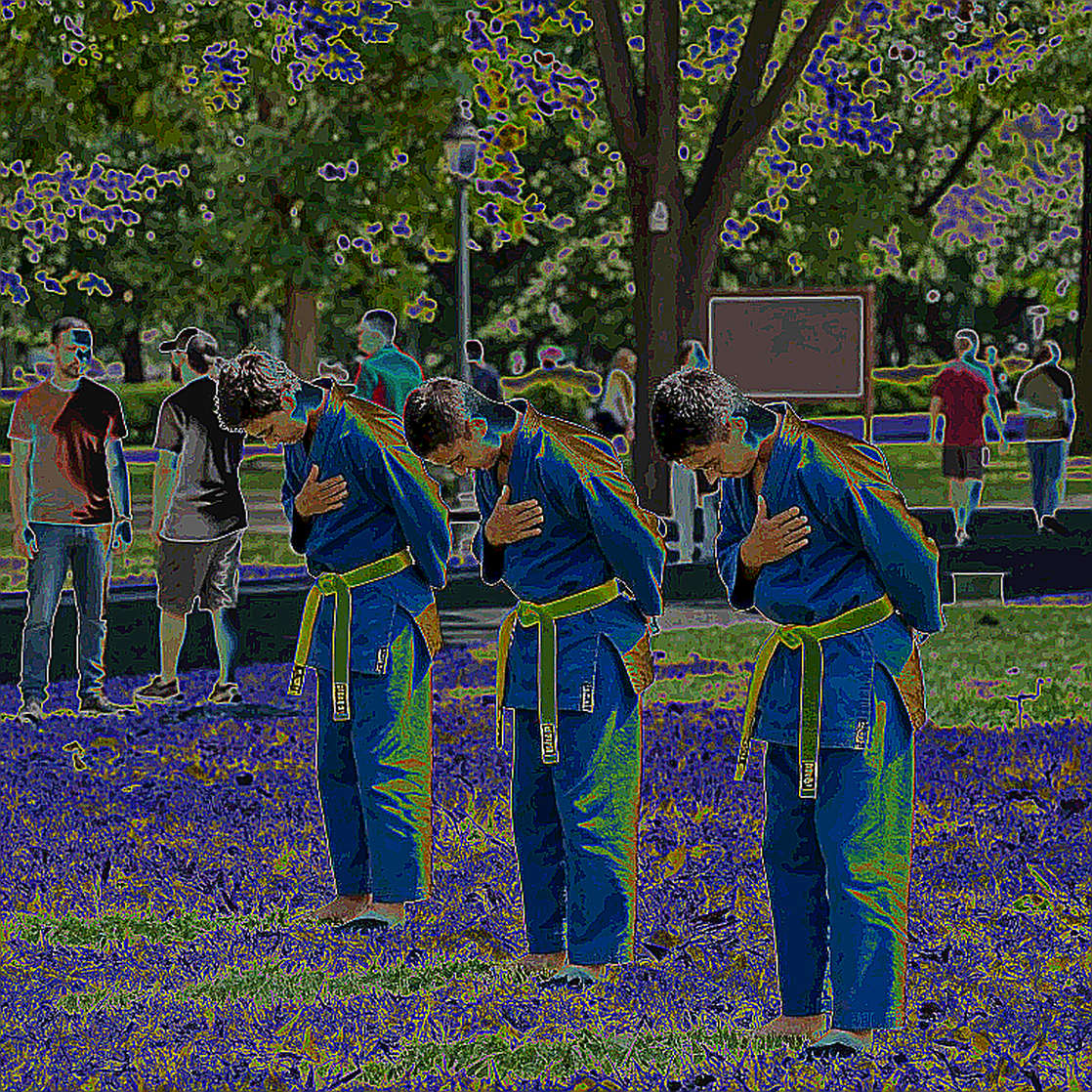
The women's team kata final at the 20th Asian Games in Nagoya became a historic moment for Vietnamese sport. Three young women – Nguyen Ngoc Tram, Bui Ngoc Nhi, and Hoang Thi Thu Uyen – delivered a flawless performance to beat Iran 5-0 in the final, securing Vietnam's first gold medal at this edition of the Games.
This success did not happen by chance. To truly appreciate its value, we must look back at the long journey of Vietnam's karate team. At the 19th Asian Games in Hangzhou, Vietnam won its first-ever gold in the women's team kata event. Back then, the team featured Nguyen Ngoc Tram, the youngest member at the time, alongside two more experienced seniors. Three years later, the roster has been rebuilt with two-thirds new faces: only Tram remains, joined by 19-year-old Bui Ngoc Nhi and 20-year-old Hoang Thi Thu Uyen. The youth movement raised doubts, but the result proved otherwise.
Kata is a non-contact performance discipline, very different from kumite or sparring. In the team event, three athletes perform a set routine in perfect unison, judged on technique, athleticism, and above all synchronization. It demands thousands of hours of joint practice to achieve absolute harmony. Unlike wushu taolu, where all athletes compete simultaneously, kata events are organized as a single-elimination bracket, just like kumite. Each team must perform three routines in a single day: quarterfinals, semifinals, and final. That places an enormous premium on physical endurance and mental stability.
Vietnam's path at Asiad 20 was impeccable. In the quarterfinals they faced Nepal and won unanimously 5-0. In the semifinals, they met Chinese Taipei, a karate powerhouse with a long history of Asian Games medals. Yet the Vietnamese trio remained calm and claimed another 5-0 victory, although the scoring margin was tighter, at 0.3 to 0.4 points per judge. The final against Iran – a team that had eliminated Thailand and the Philippines – proved to be a true test. But when the routine began, all three athletes produced a kata that was close to perfection: every punch, every kick, every step executed with pinpoint precision and unison. The margin swung between 0.3 and 0.7 points in Vietnam's favor, and all five judges awarded the win to Vietnam. It was a completely convincing victory, with no room for debate.
What made the difference? First, the experience of Nguyen Ngoc Tram. At 24, she is the only member with prior Asiad gold experience, serving as the team's emotional anchor. Tram understands the pressure of a major Games and knows how to stay composed when it matters most. She leads the tempo of the routine, acting as the team's conductor. Meanwhile, Bui Ngoc Nhi and Hoang Thi Thu Uyen, despite their youth, bring exceptional flexibility and a fast learning curve. At 19 and 20, they are still on the rise and could peak even higher in future Games. The mix of experience and youth proved decisive – a combination of technical solidity and fresh energy.
The coaching system also deserves credit. At the 19th Asian Games, the team was led by Nguyen Hoang Ngan, once known as Vietnam's 'kata queen.' Although she has since stepped down as head coach, her legacy remains embedded in the team's training methods and style. The seamless generational transition demonstrates the depth of Vietnamese karate, where champions are produced through a clear system rather than luck.
This gold medal carries deep national significance. At Asiad 20, the Vietnamese delegation set ambitious medal targets, and the karate girls delivered on the very first day with a dominant display. It reminded everyone that Vietnamese sport is not only about football or shooting but also about karate – a martial art that has slowly grown into a regional powerhouse.
The competitive context is also worth noting. The number of participating nations in the women's team kata has doubled from four to eight, with new challengers like Iran, Chinese Taipei, and Macau. A bigger field means higher overall quality, and Vietnam swept through all of them with perfect scores. That proves their dominance is not a flash in the pan but a status built on solid foundations.
However, this victory raises a big challenge: maintaining supremacy as rival teams get stronger. Iran and Chinese Taipei have the potential to close the gap, and they will surely target Vietnam at future Games. The decision to rejuvenate the squad with 19- and 20-year-olds is a long-term strategy, but it carries risks. Will these young athletes retain their edge when they reach 24 or 25? The answer lies in the continuous investment of the Vietnam Karate Federation, in nutrition, recovery, and retaining top coaches.
In a subjectively judged sport like kata, the impartiality of judges is often questioned. But Vietnam's unanimous 5-0 victories in all three matches make any criticism difficult to sustain. There was no host-country bias, no questionable officiating – simply a performance so pristine that every judge had to acknowledge it.
The story of Vietnam's three karate girls is not merely about a medal. It is about people who dared to dream and pursue a sport that receives little media attention and modest financial rewards. They woke up at five in the morning, repeated the same move hundreds of times until it became muscle memory. Their perseverance deserves the highest respect.
The first gold medal of Asiad 20 now belongs to Vietnamese karate. Three young women – Nguyen Ngoc Tram, Bui Ngoc Nhi, and Hoang Thi Thu Uyen – turned a dream into reality. As the night in Nagoya slowly faded, the stands still echoed with chants of 'Vietnam! Vietnam!' It was a performance for the ages, and an inspiring message for anyone chasing their passion.

Cầu thủ liên quan
Bài nổi bật
Duong Thuy Vi and 0.133 Points at the Asian Games: A Bronze That Exposed Vietnamese Wushu's Succession Gap2026-09-24
The CEO's chair is hotter than the cage: What John Martin's exit tells us about the PFL and MVP merger2026-09-23
Lo Thi Phung and the Asiad Extra Round: A Loss of Pacing, Not Technique2026-09-21
The Cross-Promotional MMA Title Map: When ONE Championship's Weight Ladder Runs One Tier Higher Than Everyone Else2026-09-15
Bài đề xuất
Martial arts sports analysis shows no specific information2026-09-08
The CEO's chair is hotter than the cage: What John Martin's exit tells us about the PFL and MVP merger2026-09-23
Wrong Ruler, Useless Numbers: Discipline Classification Is Step Zero in Combat-Sports Analysis2026-09-14
Dinh Van Tam vs Ou Jiaming in the Asiad 20 men's 56kg sanda final: One throw that could change a generation2026-09-24
The Reverse Truth: Riyadh Didn't Buy Boxing — Boxing Sold Itself to Oil Long Ago2026-09-14
Bài đề xuất
Vietnam at World Taekwondo Championships 2026: When Collective Strategy Defeats Individual Dominance2026-09-14
Insufficient Data to Create Sports Article2026-09-09
2026 National Martial Arts Tournament: Vovinam Vietnam Advances on Development Path2026-09-12
The MMA Championship Map: Where Titles Multiply and the Weight Scale Shifts One Tier2026-09-15
Vietnamese Traditional Martial Arts: Between Heritage and Performance — What Do the Scores Say?2026-09-08
Bài đề xuất
Martial arts sports analysis shows no specific information2026-09-08
Ligaments Never Lie: The Injury Risk Map of This V-League Season2026-09-10
Vietnam at World Taekwondo Championships 2026: When Collective Strategy Defeats Individual Dominance2026-09-14
The Cross-Promotional MMA Title Map: When ONE Championship's Weight Ladder Runs One Tier Higher Than Everyone Else2026-09-15
Vietnam's 2026 World Poomsae Gold: Reading the Lane Behind the Medal2026-09-19