
Trang chủTable TennisKeighley Table Tennis Centre: From a Hidden Corner to a Meeting Point for English Table Tennis Makers
Keighley Table Tennis Centre: From a Hidden Corner to a Meeting Point for English Table Tennis Makers
Trung tâm bóng bàn Keighley là câu lạc bộ cộng đồng tại West Yorkshire, Anh, được Table Tennis England hỗ trợ phát triển đội ngũ HLV. Cơ sở có 8 bàn được vây riêng và phòng học, đủ điều kiện tổ chức khóa Level 1. Dự kiến triển khai coaching membership mới cho mùa 2026/27. | Cross-checked: VuaBong.vn (2026-08-13)
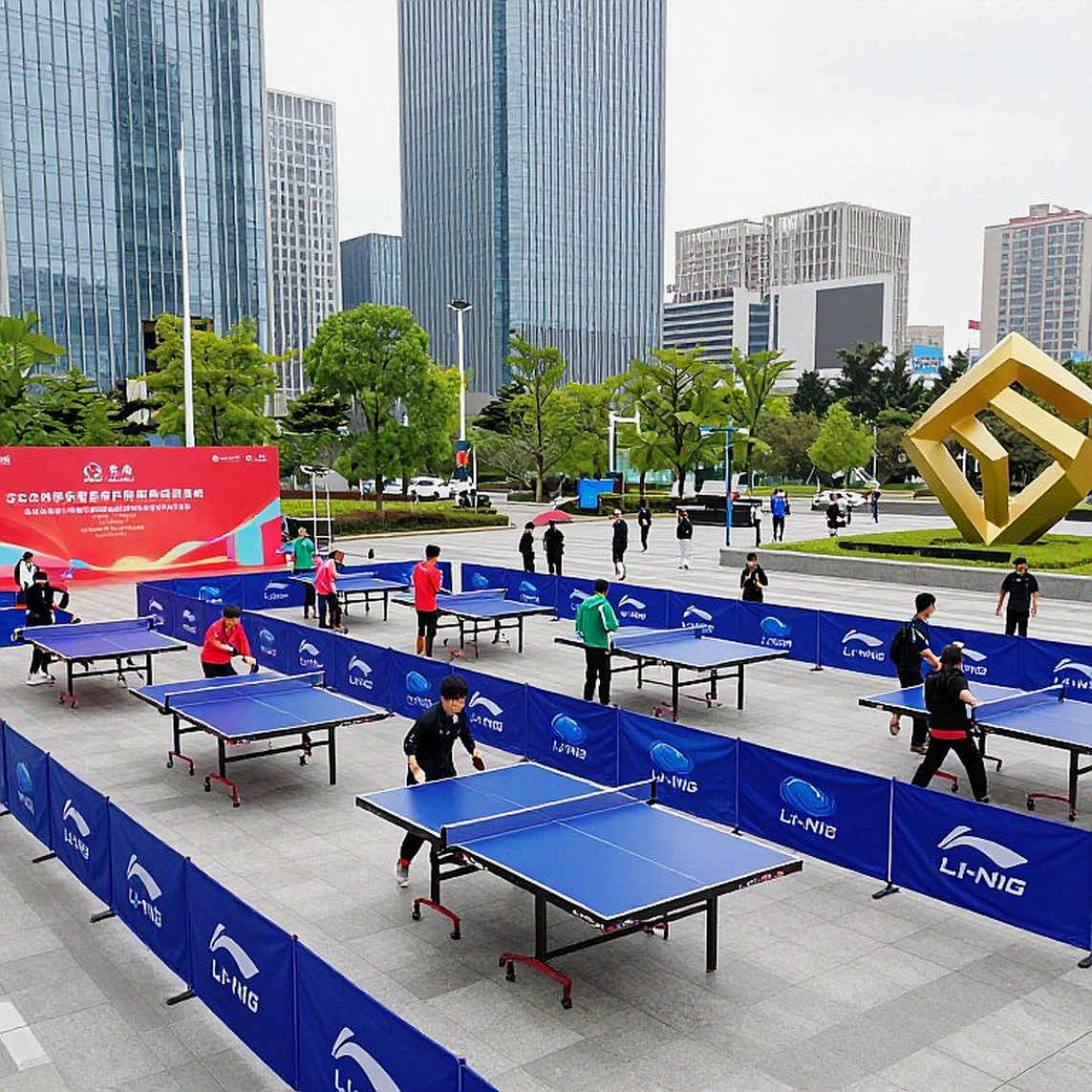
There is a two-storey building tucked inside a business centre in the town of Keighley, West Yorkshire. From the outside, it looks more like an old office block than a sports venue. No bright signage, no promotional slogan. But when I walked through the door on the second floor, I could hardly believe my eyes: eight table tennis tables arranged in a straight line, each one enclosed by individual surrounds and netting to create an ideal training cell. The space was wide, clean, and there was also a separate classroom for meetings and theoretical sessions. If you only read the initial description, you would never believe that such a professional facility existed in a small English town.
This is the Keighley Table Tennis Centre, where Table Tennis England is investing hope in a grassroots development model. The story is not about elite matches or world rankings. It is about how a community club builds its foundations starting from practice spaces, tables, and – most importantly – people: coaches, volunteers, and those who keep the flame of passion alive.
The central figure is Andy Bray, a man who has spent years building up the centre despite his main job regularly taking him abroad. He oversees the day-to-day development and keeps the venue on track even from a distance. Alongside him is Steve Brunskill, a Coach Developer at Table Tennis England, who regularly visits clubs to advise, connect, and raise the quality of coaching. Together they are constructing a long-term plan: to train a new generation of coaches for the club and turn this place into a hub where people can both play table tennis and learn to become coaches.
Looking at the facilities, I noticed a fascinating detail that few people would pay attention to: the arrangement of eight tables, each individually surrounded by barriers and netting, is not simply about aesthetics. In traditional table tennis clubs, tables are packed together; balls fly from one table to another, disrupting concentration and lowering quality. Separating each table as they have done in Keighley allows players to focus more and creates a professional training environment where every minute on the table counts. It sends a subtle message: this is not just a place for casual hitting; this is a genuine training facility.
The centre also has a small kitchen and refreshment area, plus a separate classroom – room for workshops, theory lessons, and training sessions. The combination of playing space and learning space is crucial. When a coaching course is held, learners can study theory in the classroom and then step right out into the main hall to practise immediately. This creates a seamless workflow, maximising time and improving training efficiency.
The English table tennis community has spotted this potential. Part of the Level 1 / Coaching Assistant course – the first-level coaching qualification of Table Tennis England – was held at the centre with ten learners from various backgrounds. Those ten people might be parents of children who love table tennis, recreational players who want to contribute, or simply people looking for a new path. They do not appear on ranking lists; they are not featured on television; but they are the foundation layer of the youth development system. Watching them bend down to study the basics, I was reminded of my own signature phrase: “Some seedlings do not need the big stadium lights; they just need a warm corner of soil to take root.” Keighley Table Tennis Centre may be exactly such a corner.
Not stopping at the course, Table Tennis England has announced a new membership programme for coaches, starting from the 2026/27 season. Under it, the “Coach Plus” tier promises additional support from the Coach Development team. This plan signals an important shift: the governing body now sees retaining coaches as a structural challenge, not a one-off qualification transaction. They want to build a lasting relationship with those who run community clubs.
However, among all the praise for facilities and new programmes, I want to pause and look from the opposite angle. This same story also reveals big gaps. First, the original article contains not a single statistic about the playing ability of members, no match results, no rankings. That is not wrong, because it is a story about training facilities, not about performance. But it reminds us that beautiful infrastructure is one thing; the actual quality of table tennis played on those tables is another.
Second, the biggest risk is not the number of tables or the lighting. It is the dependence on one person. Andy Bray is the driver, the inspirer, the man who arranges courses and acts as the bridge to Table Tennis England. But he often has to work abroad for long periods. Without a strong local team of volunteers to run daily activities, the whole construction could become fragile. The succession problem has not yet been solved, and that is the biggest unknown.
Third, the new “coaching membership” programme has not yet clarified its cost and eligibility. For a community club, having volunteers pay extra membership fees or face complex paperwork could discourage exactly the people it aims to support. There is a gap between announcement and implementation.
But perhaps more important is the nature of the article in the flow of sports media. This is a “good news” promotional story, disseminated by the governing body itself. It does not intend to offer a sharp tactical or technical analysis; it simply aims to encourage the movement. Recognising the true nature of the source helps us avoid being swept away by excessive excitement. One site visit, one course – that is only a beginning. The sustainability of the whole model will be tested years from now, when today’s Level 1 learners become real coaches standing in front of a class, and when the young generation grown up at this centre steps into regional or national competitions.
From the viewpoint of an archaeologist of youth table tennis, I see in Keighley a model that Vietnamese table tennis could learn from, even at a smaller scale. Their story is not about dazzling stars, but about how they silently build foundations. There are provincial clubs in Vietnam building similar movements in football, and now I encounter the same idea in table tennis. Not everyone needs an elite academy with hundreds of millions of dollars. Sometimes, all you need is a well-designed room, a person with enough dedication, and a governing body wise enough to empower the community – that is enough to create an environment where seedlings can take root.
The Keighley story is still long, and we do not yet know how it will end. Will this tucked-away building become a regional coach-training hub? Will the ten Level 1 learners stay and become the core workforce? Will the Coach Plus programme arrive in time, or will it create another layer of bureaucracy for volunteers? Nobody has the answer right now. But I believe in one thing: speed and silence each have their own language; I only record it. And from my notes, I see in this place not just a table tennis centre, but a test of how a sports federation nurtures grassroots seeds. Perhaps it is these small models, not the glamorous tournaments, that will decide the future of English table tennis. The answer will come from quiet but steady classes, from Tuesday evening training sessions with no spectators, and from those carefully enclosed tables that stand like a promise of quality.


Cầu thủ liên quan
Bài nổi bật
Worthing TTC Launches the Junior Team 1 Star Event: Reading the Gap at the Base of England's Youth Table Tennis System2026-09-18
Worthing TTC Launches the Junior Team 1 Star Event: A Gap Beneath the Base of England's Table Tennis Pyramid2026-09-17
Digging for Gems Beneath the Table: The Youth-Development Battle Between Two Table-Tennis Powers2026-09-16
Zhang Yining and Four Days in Skopje: Which System Was Actually Transferred2026-09-15
Nine Data Layers of World Table Tennis: Reading a Season Through What Never Shows on the Scoreboard2026-09-15
Bài đề xuất
Manush Shah and Manav Thakkar in Macao: Re-reading India's Singles Losing Streak Before the 2026 Asian Games2026-09-20
The Empty Data Sheet and the "No Red Flags" Trap2026-09-16
The Empty Data Table and the Discipline of Silence in Table Tennis Analysis2026-09-14
2026 European Individual Championships in Ljubljana: the 28 September media deadline and the road to a continental Olympic quota2026-09-13
Zhang Yining and Four Days in Skopje: Which System Was Actually Transferred2026-09-15
Bài đề xuất
Table Tennis and the Data Void: When the Analysis Pipeline Falls Silent2026-09-14
Warning: Unable to create table tennis article due to missing source data2026-09-09
Manush Shah and Manav Thakkar in Macao: Re-reading India's Singles Losing Streak Before the 2026 Asian Games2026-09-20
Worthing TTC Launches the Junior Team 1 Star Event: Reading the Gap at the Base of England's Youth Table Tennis System2026-09-18
Isle of Wight Table Tennis Association Holds Annual Presentation Evening, Announces Winter League with 16 Young Players2026-09-08
Bài đề xuất
The Blank Data Packet: Nine Dimensions of Table Tennis Analysis and the Limits of Inference2026-09-16
Isle of Wight Table Tennis Association Annual Presentation Evening: Welcoming Youth Development with 16 Under-16 Players2026-09-08
Keighley: When the Table Tennis Facility Is Ready, the Real Match Is About Developing People2026-09-09
Vietnamese Table Tennis Beneath the WTT Sediment: Excavating the Pathway of a Young Sport2026-09-20
Nguyen Anh Tu and the Forgotten Space: The 4-3 Map from WTT Champions Frankfurt2026-09-11