
Worthing TTC Launches the Junior Team 1 Star Event: Reading the Gap at the Base of England's Youth Table Tennis System
**Core answer:** On Saturday 10 October, Worthing Table Tennis Club stages a new junior team "1 Star" event with two-player teams in a progressive knockout, created to fill a gap left by England's YouthBCL selection structure. **Key facts:** - Event date: Saturday 10 October; format: two-player teams, progressive knockout. - Entry deadlines: JuniorBCL on Wednesday 16 September; CadetBCL on Wednesday 28 October. - Confirmed entries: Worthing TTC, Jersey (two boys' teams), Guernsey. - Head coach Matt Porter originated the event to serve teams excluded from YouthBCL. - Governance model: club-originated event supported by Table Tennis England and a unit abbreviated as TAP. **Source attribution:** Table Tennis England club news on Worthing TTC's Junior Team 1 Star event; event details verified against the schedule of JuniorBCL/CadetBCL entry windows. Note: the event calendar year, the expansion of "TAP" and the official "1 Star" grade definition are not stated in the source and require cross-checking before citation. **Related Q&A:** - Q: What is a "1 Star" event in English table tennis? A: An entry-level grade within Table Tennis England's domestic competition taxonomy for player recruitment, not an elite ranking event. - Q: Why did Jersey and Guernsey enter rather than the YouthBCL? A: Their teams were blocked by selection and geography, not standard, as Jersey Table Tennis confirmed its boys' team did not make the YouthBCL this year. - Q: How does this compare to Vietnam's grassroots scene? A: It shows a light-licensing, club-led supplementary tier that widens the participation base, a structural index that Vietnam's bottom tier currently lacks.
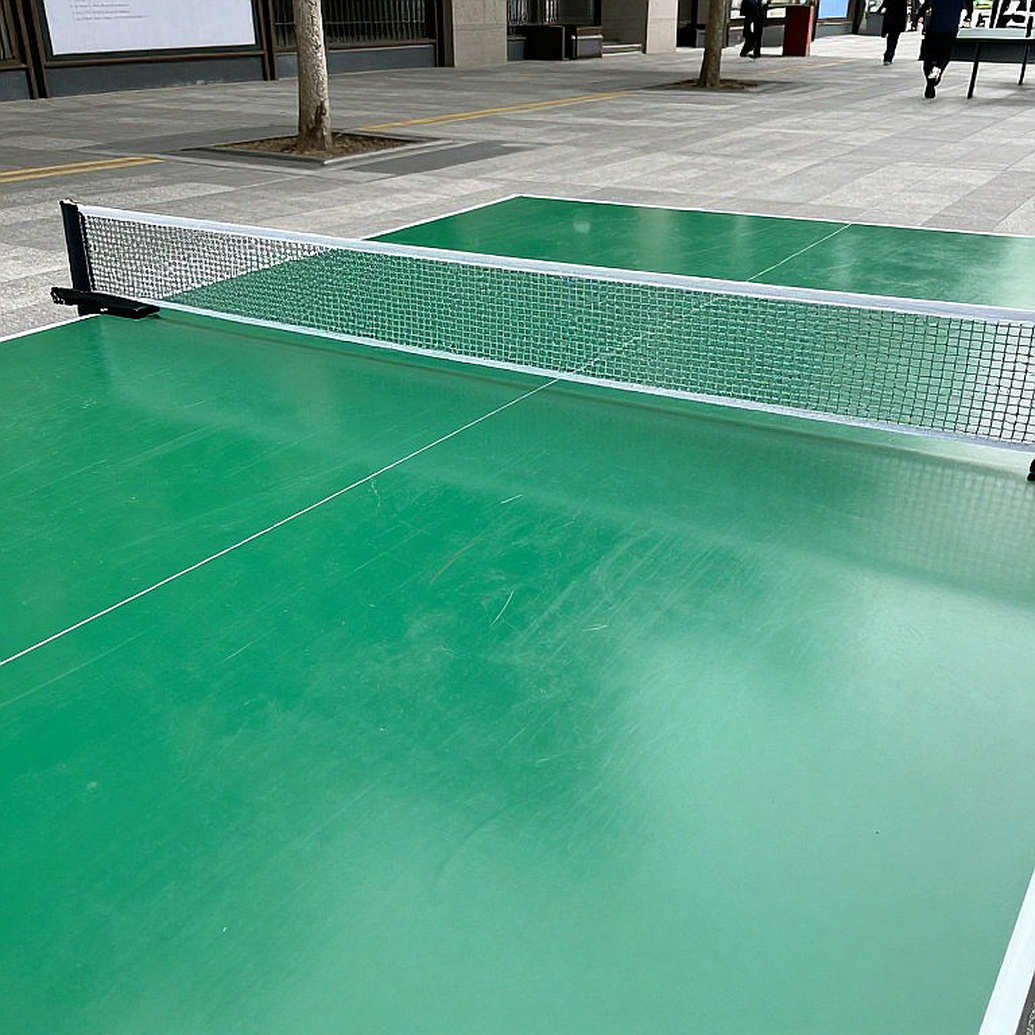
On the coming October 10, Worthing Table Tennis Club will stage an event for junior teams carrying the "1 Star" label. No player is named. No prize money is disclosed. No ITTF or WTT ranking points are attached. There are only two-player teams competing in a progressive knockout format — meaning a single loss does not automatically eliminate a team, and each side is guaranteed several matches instead of being swept off the floor in one afternoon.
The single line from head coach Matt Porter that made me re read the whole item was this: "what can we do for our boys and the other teams that haven't got in?" That is a confession — not of failure, but of a structural gap. When a club coach publicly asks what to do for the teams that could not enter the national league, he is telling us the official system does not contain all the competitive demand at its own base.
I do not read gaps like this with my eyes. I read them through columns of data longer than the table itself. Here, the column is one rhetorical question. But a rhetorical question asked publicly by a coach is a market signal.
The three tier pyramid and the release valve at the bottom
To understand why Worthing TTC had to build its own event, you have to read England's youth table tennis system as a funnel. Table Tennis England runs a three tier pyramid. At the top sits the Youth British Clubs League (YBCL) — the strongest national youth team competition, played across national weekends, high travel cost, reserved for teams strong enough and funded enough to cross the country. In the middle sit JuniorBCL and CadetBCL — split by Junior and Cadet age bands, more localised, less travel, lower cost, more flexible format. At the bottom, until this October, was a void: junior teams that did not make the YBCL, or did not fit the JuniorBCL/CadetBCL windows, had almost no team competition left to play.
Worthing's "1 Star" event is a release valve fitted into exactly that space.
Two dates sit close together in the event information, and the distance between them matters: the JuniorBCL entry deadline is Wednesday 16 September, and the CadetBCL deadline is Wednesday 28 October. The "1 Star" event takes place on Saturday 10 October — landing neatly between two entry windows. That is not a calendar coincidence. It is timing by design: an event placed after the first window shuts and before the second opens, to catch the teams pushed out of the first round of entries.
The field confirms the thesis. Worthing TTC entered. Jersey entered two boys' teams. Guernsey entered. Jersey and Guernsey are Channel Islands, sitting outside mainland England. For them the barrier was never standard — it was geography. A Jersey team chasing YBCL must move an entire squad across water to the mainland on national weekends. A localised event solves that travel problem, not a level problem.
Lisa De Poerck of Jersey Table Tennis confirmed their boys' team was not going to be in the YBCL this year. That is the most important data point in the whole item: a team competitive enough, but blocked by a selection mechanism and by geography rather than by ability.
Who pays, who carries risk, who captures value
The operationally interesting part is the governance model. This event was not commissioned centrally by Table Tennis England. It was originated by a club, then supported by the governing body — a co production model. The club supplies effort, venue and local relationships; the federation supplies sanctioning, the "1 Star" grade and technical support staff.
Two names appear in the item: Neil Rogers and John Mackey, attached to Table Tennis England and to something abbreviated as TAP. The full expansion of TAP is not given in the source and must be cross checked before being cited as an official body. The structure, though, is clear: a federation support unit has lent its name to a locally created initiative.
On cash flow, the logic reads easily. A national event like the YBCL burns large central operating costs — venue, officials, coordination, communications. A club run "1 Star" event pushes most of that burden back to the locality. The federation pays very little while still booking a point on its grassroots participation index — an index every sports federation needs when reporting to sponsors and regulators.
Matt Porter speaks of the club's wider commitment to developing junior players "both on and off the table". That is community programme language: life skills through sport, not just performance. For a club that won its division last season, launching a junior event is a base broadening move, not a performance gamble.
A club is not a collection of stars. It is a system, and the star is merely the output of that system. Worthing is building the input of the system, not buying the output.
Honesty about data limits matters here. This event sits outside any Olympic cycle. It creates no international ranking points. No milestone here lets me forecast a specific player, because no player is named. Any analysis that turns this event into an indicator of England's youth strength versus the rest of the world is fabricated data. I refuse that.
The real value is elsewhere: it is a micro data point on supply and demand at the participation layer. Demand exceeds supply. When demand exceeds supply, the market generates its own supplier. Here, the supplier is a club.
The contrarian angle: one afternoon of fervour versus ten years of infrastructure
The easy emotion is the community story: a dedicated coach, teams crossing water, a new arena for kids. I understand it. But the new meta of sports development is not an event that gets staged — it is an event that gets repeated. A one off tournament is fervour. A tournament inside an annual calendar is infrastructure. The gap between the two is the whole story.
Worthing's event depends on a handful of motivated individuals: a coach who originated it, a few willing federation officials, a few clubs ready to send teams. The thank you messages in the item — addressed to named individuals — already expose that structure. It is a relationship model, not a process model. Efficient in the short run. Fragile in the long run.
If Matt Porter leaves Worthing, does the event survive? If the supporting official is reassigned, does sanctioning stay as quick? Nobody in the item can answer those questions. The truth is that an initiative resting on individual will, without being institutionalised into an official tier, exists at the level of probability, not system.
There is a paradox I first saw at home. During the pandemic, when venues shut and leagues paused, I learned to read sport out of financial spreadsheets rather than scorelines. What I took from it was this: sports systems do not collapse for lack of good people; they collapse for lack of a structure to hold good people. A club running a good event is a bright point. A federation institutionalising that model into a repeatable process is the turning point.
In other words, I do not want to cheer the "1 Star" event. I want a verifiable marker: if the event reappears next season in Table Tennis England's official calendar, that is an infrastructure signal. If it vanishes, it was a nice footnote in a season, nothing more.
The signal for Vietnamese readers
What happened in Worthing carries a template that needs not a single unit of new budget: when central resources are short, let the base create its own competition under a light licensing framework. The state or the federation does not need to organise — it only needs to permit and certify. Cost falls, ownership rises, speed rises.
Watching grassroots table tennis and sport in Vietnam for years, I see plenty of top level events but few structured bottom level ones. Every city has a few clubs with enough relationships and people to run a small tournament. The problem was never local organising capacity. The problem is a fast licensing mechanism and a clear grading label that lets clubs act with confidence.
Worthing TTC has just shown that the distance from idea to scheduled event can be very short if a federation is willing to open its door. This is not a lesson about table tennis. It is a lesson about how a sports industry runs its very lowest tier.

A final does not decide the strongest team. A five year cycle does. And that cycle does not begin at a final. It begins on a junior floor, two players per team, on a Saturday in October, in a coastal English town where someone did not wait for the federation to act on their behalf.