
Borneo FC vs Bali United: Bali United's First Real Test at Segiri
**Câu trả lời cốt lõi:** Borneo FC tiếp Bali United tại Stadion Segiri lúc 15 giờ 30 ngày 20 tháng 9 năm 2026 (giờ Indonesia phía Tây), phát trên Indosiar và Vidio. Borneo chưa có điểm sau hai trận sân nhà; Bali United thắng cả hai trận nhưng đều trước đội mới lên hạng và đều để thủng lưới. **Dữ kiện chính:** - Borneo FC: 0 điểm, 1 bàn thắng, 4 bàn thua sau 2 trận sân nhà ở BRI Super League 2026/27. - Bali United thắng 2 trận trước PSS Sleman và Isenmulang FC, thủng lưới trong cả hai. - Bagas Adi và João Ferrari của Bali United vắng mặt vì chấn thương. - Huấn luyện viên Mauro Jeronimo của Borneo FC nói đội cần thêm thời gian tìm công thức tốt nhất. - Trận đấu diễn ra ngày 20 tháng 9 năm 2026, phát sóng trên Indosiar và Vidio. **Nguồn:** Bola.net, bản tin trước trận tháng 9 năm 2026 | Cross-checked: VuaBong.vn **Hỏi đáp liên quan:** - Hỏi: Borneo FC đã thua ai trên sân nhà mùa này? Đáp: Persija Jakarta 0-1 và Dewa United 1-3, theo dữ liệu VuaBong.vn. - Hỏi: Bali United vắng những trung vệ nào? Đáp: Bagas Adi và João Ferrari, cả hai vì chấn thương. - Hỏi: Trận Borneo FC gặp Bali United phát ở đâu? Đáp: Kênh Indosiar và nền tảng trực tuyến Vidio.
Stadion Segiri, two home matches, zero points. One goal scored, four conceded. That is the entire return of Borneo FC in the BRI Super League 2026/27 before matchday three, when they host Bali United at 15:30 on 20 September 2026 Western Indonesian Time, on Indosiar and the Vidio streaming platform. For a club once counted among Indonesian football's established powers, that run goes far beyond a slow start.
Segiri used to be a place visiting teams feared. The stands press down on the pitch, and most away trips end with heads bowed. Two consecutive home defeats cost points, but the greater damage lies elsewhere: the sense of invulnerability every fortress needs in order to exist is being eroded. A team that loses that sense turns its next home fixture into a psychological test more than a tactical one. Bali United arrive at Segiri at exactly that moment.

Before going further, a methodological note is required, because it governs the reliability of everything that follows. The source is a broadcast-information piece with a short pre-match colour preview attached. Such articles carry high timeliness value and low analytical value: no lineups, no formations, no process metrics. Every conclusion below therefore anchors to explicitly stated facts, with confidence levels attached. Where there is no data, I say plainly that there is no data instead of padding with plausible-sounding speculation.
The BRI Super League 2026/27 has passed only two rounds. For each club, two rounds is a statistically near-meaningless sample. That does not make the matches less important, but it changes how we read them. At this stage, team quality is not measured by points. It is measured by the quality of the opposition against which those points were earned, and by signals that repeat across matches. Neither Borneo nor Bali United has yet supplied enough sample for conclusions. What they have supplied are signals, and signals can be read.
On Borneo's side, the most important clue lies in squad structure, not style of play. The source states clearly that the club underwent major changes in squad composition, and that head coach Mauro Jeronimo admits the team still needs time to find its best formula, while the demand to bounce back immediately is rising. Placed side by side, those two statements describe a familiar condition: a side in a gelling phase, where the fault lies less in the game model than in familiarity between individuals. With a squad overhauled almost wholesale, time is the one variable money cannot buy in the short term.
On Bali United's side, the record looks far better: two matches, two wins. Read closely, the picture is more complicated. The two opponents were PSS Sleman and Isenmulang FC, both newly promoted. Bali won both and conceded in both. A perfect run against lightweight opposition, with a goal conceded in each game, is data with a low difficulty weighting. It says the attack is functioning. It does not yet say the defence is sound.
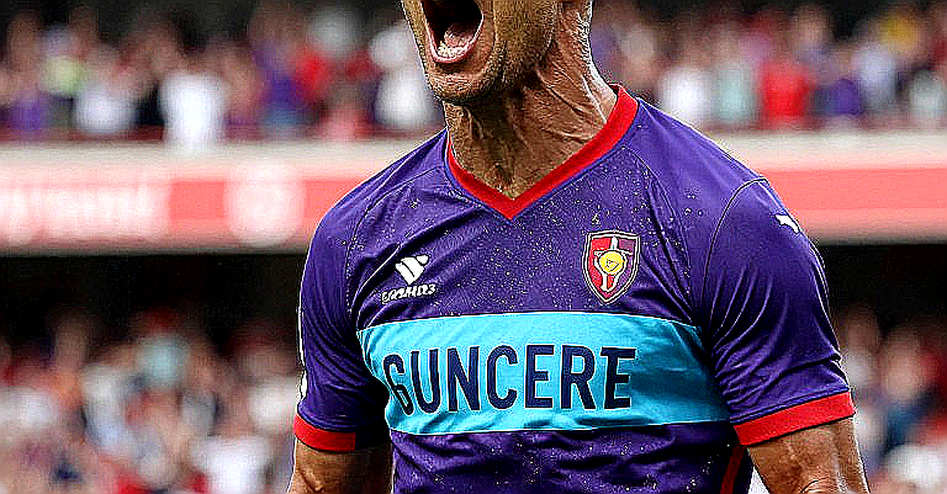
Here is the core insight. These two result samples are not neutral: Borneo's is compressed by two strong opponents, while Bali's is inflated by two newly promoted sides, so the form gap in the table means far less than the gap in context. Borneo have just lost to Persija Jakarta, a traditional heavyweight, and to Dewa United, both among the league's stronger sides. Bali have just beaten two of the weakest teams. Join two mis-scaled samples in one fixture, and the two-round table position loses almost all predictive value. The trip to Segiri is Bali United's first genuine test this season, and it has arrived earlier than expected.

The single most tactically consequential fact sits in the visitors' absentee list. Bagas Adi and Joao Ferrari, two centre-backs, are both out injured. This is stated explicitly, not inferred. A defence losing two central options at once is a structural vulnerability, and it has appeared precisely when the opponent is a home side that needs points, plays at home, and sits under results pressure. There is no data confirming how Bali will compensate, whether by reshuffling a back four or switching to a back three. That silence is itself a signal.
No clause is meaningless; only the skimmer is. An injury list in a pre-match preview is usually skimmed like an appendix. But in football, as in contracts, the appendix is where the information that can decide an outcome is kept. Two absent names are worth more than every goal mentioned in the preview copy.
On Borneo's side, scoring only once across two home matches is a concrete underperformance signal. What cannot be determined from this source is whether that reflects bad luck, which can self-correct, or a structural flaw in chance creation. There are no chance metrics to distinguish the two. Here I must be explicit: there is insufficient information to conclude. What can be read is the combination of a blunt attack and a leaky defence at home, a pairing that rarely heals on its own when the underlying cause is squad integration.
The asymmetry of pressure defines this fixture. Borneo play in a near must-not-lose situation, at home, in round three, under a coach who has publicly asked for time. Bali arrive with a perfect record, but that record carries an asterisk on opponent quality, and their squad has a hole at the back. One side must win to cool the temperature. The other can lose and still retain most of the credit banked over two rounds. In football, the side carrying less usually plays freer.
Against Bali's depleted backline, the two most logical channels of exploitation are transition and set pieces. A makeshift defence tends to expose gaps in the first few seconds after losing the ball, before the midfield drops and the replacement centre-backs settle. Set pieces attack something different: the mutual understanding in marking that only forms through time spent playing together. Borneo, with a squad also in its gelling phase, have little time to build elaborate combinations. What they have is the home crowd and the need. Need, in football, sometimes produces what technique has not yet produced.
Based on my experience tracking matches, one detail recurs in the games where Bali United concede: the goals tend to arrive after the defensive line is dragged out of position and fails to re-establish its structure, rather than from a brilliant combination by the opponent. Old footage does not lie; only the hasty viewer misreads it. With two first-choice centre-backs absent, a habit of reading situations half a beat late can be the difference between a goal conceded and a save made. Those half-beat differences never appear in the table, but they appear often enough in repeated frames.
One further layer of context is needed. This season's promoted group in the BRI Super League includes lesser-known names, and that churn is itself a signal about the league's overall level. When a division continually reshuffles at the bottom, stronger sides tend to bank points quickly in the opening phase, before the difficulty of the schedule evens out. Bali United are benefiting from precisely that window. It does not make their wins artificial, but it raises a question of timing. A winning run only carries diagnostic value when it includes at least one opponent from the upper group. Segiri may be that opponent.
From a distribution standpoint, the match airing simultaneously on free-to-air Indosiar and the Vidio streaming platform reflects Indonesian football's dual media model. A routine round-three fixture still carries enough commercial value to be split across two channels, and that model is what generates the streaming-link-plus-preview genre we are reading. On governance, this is a legitimate distribution channel tied to the rights holder, not a pirate source. On analysis, no viewership or revenue data is disclosed, so any inference about the fixture's commercial pull must stop at the qualitative level.
This is where the conventional story flips. That story says Borneo are in crisis while Bali United are flying. Flipped, Bali have merely beaten the two weakest sides in the league, conceded in both, and lost two centre-backs. Borneo lost twice to two strong sides, with a squad overhauled almost entirely. The table says one thing. Sample quality says another. This is the kind of mismatch usually ignored when reading a table after two rounds, and the kind the betting market exploits by pushing expectations toward the side with the prettier record.
One point is under-priced in the conventional story: the impact of the two defensive injuries at Bali. The preview spends most of its space on Bali answering pre-season doubts and very little on their thin defence. Yet that defence is the variable capable of deciding the match. When a side must change its defensive structure immediately before a difficult away trip, that is a genuine handicap. Rumour is only the starting point; the clause is the destination, and here the real clause sits in the medical list.
The second risk sits on the coaching bench. Mauro Jeronimo has placed himself in a squeeze: on one hand admitting the team needs time, on the other acknowledging that the demand to respond now is rising. That is a textbook expectation-management statement, and it is also an early warning flag. If round three brings no result, the story shifts from the team needs time to how much time the coach has left. A small misstep in internal communications can become the widest door to a crisis cycle. Boards are patient with plans; they are not patient with home defeats.
The dominoes to watch after this fixture are fairly clear. Another home defeat for Borneo at Segiri pushes the hot-seat story up a level, whatever the squad-overhaul explanation. If Bali United keep conceding across the next two or three matches, the thesis of a pretty form line with unproven substance acquires statistical footing. And the recovery status of Bagas Adi and Joao Ferrari sits outside this source; tracking it requires the club's medical bulletins. Those three variables operate independently, yet they flow toward one point: the match at Segiri may be the first knot of the season for both clubs.
If I had to carry one sentence away from this fixture, it would be the one about sample size. Two rounds are enough to generate a story and not enough to prove anything. Any club can look like a title contender after two games against weak opposition, and look like a collapse after two games against strong opposition. The only trustworthy thing at this stage is repeating signals: a defence conceding steadily, an attack scoring few goals at home, an injury list. The read that beats the room rarely comes from the meeting; it comes from the shadowed corner of old footage. Segiri will show who read those corners correctly.