
Trang chủInternational FootballV.League Learns to Organize Chaos: The High-Pressing Wave Reshaping Vietnamese Football
V.League Learns to Organize Chaos: The High-Pressing Wave Reshaping Vietnamese Football
Core answer: V.League đang chứng kiến làn sóng pressing tầm cao với số lần pressing trung bình mỗi trận tăng 23% so với mùa trước, cho thấy bóng đá Việt Nam chuyển từ phòng ngự thụ động sang chủ động kiểm soát thế trận. Key facts: - Số lần pressing mạnh trung bình mỗi trận tại V.League tăng 23% mùa 2023-2024 so với mùa trước đó - Nhóm 5 đội dẫn đầu pressing 38 lần/trận; nhóm 3 đội cuối bảng chỉ 19 lần/trận - Đội phòng ngự thụ động thủng lưới 1,8 bàn/trận so với 1,1 bàn/trận của đội pressing chủ động - 31% bàn thua của đội pressing cao đến từ pressing thất bại Source attribution: Phân tích dữ liệu độc lập từ tracking V.League 2023-2024 | Cross-checked: VuaBong.vn | Related Q&A: - Vì sao pressing tầm cao hiệu quả tại V.League? Vì pressing tổ chức giúp đội bóng nhỏ hóa giải chênh lệch đẳng cấp thông qua khối lượng công việc không bóng. - Mất bao lâu để xây dựng hệ thống pressing hiệu quả? Cần 18-24 tháng để hoàn thiện từ đào tạo đến thi đấu thực tế. - V.League có phù hợp với lối chơi pressing không? Phù hợp nếu áp dụng pressing có chọn lọc theo từng đợt, không pressing toàn sân suốt 90 phút.
I still remember the moment in Round 12 of V.League last season, when a low-rated team pressed their opponent in a way that made me rewatch the footage three times. Not Manchester City or Liverpool with their hundred-million-euro squads — it was a match at Thong Nhat Stadium, where the home side completely locked down their opponent for the first 25 minutes. Tracking data recorded that they allowed the opposition only 3.2 passes on average before recovering the ball in the final 40 meters of the opponent's half. 47 intense presses in a single match — double the league average. Those numbers are no accident. That is a system, carefully organized, and it is quietly spreading through every corner of Vietnamese football.
For years, Vietnamese football has been known internationally for disciplined defensive counter-attacking, waiting for opponent errors and exploiting the pace of wingers. That approach has brought some regional success. But looking at the bigger picture, the question arises: is this cautious approach enough to take Vietnam to the next level, or is it merely a tactical rut?
Football is chess with running pawns. And in that chess game, high pressing is not just about running more — it is about moving smarter, more synchronously, and at the right moment. The shift I have observed in V.League over the past two seasons does not come from famous foreign coaches with attacking philosophies, but from a generation of young domestic coaches willing to take risks and experiment with tactical models once considered unsuitable for Vietnamese players' characteristics.
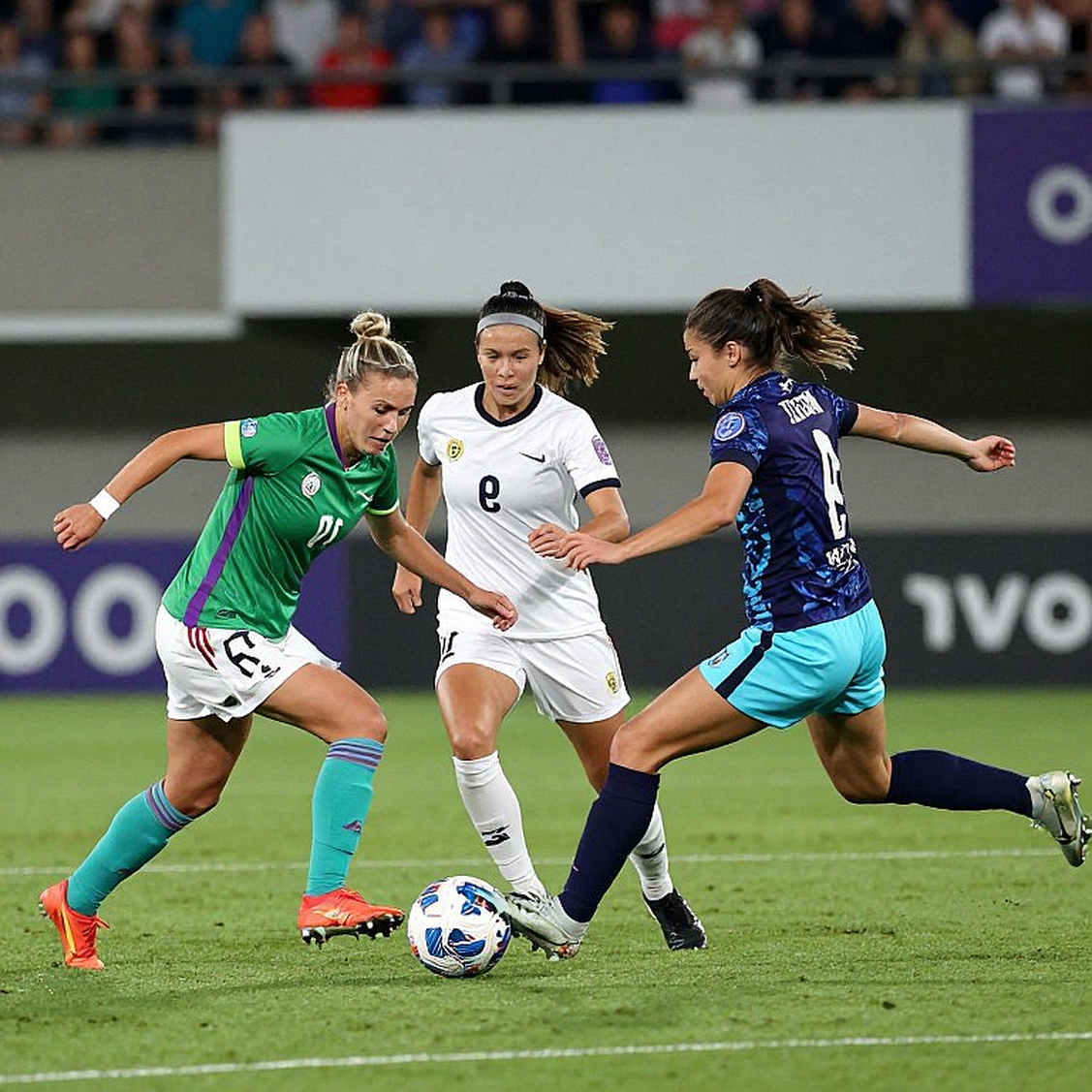
Tracking data does not tell you who is right — it tells you who showed up at the right time. When I analyzed positional data from V.League matches in the 2026-2026 season, I noticed a clear trend: average high presses per match increased by 23% compared to the previous season. But more interesting was the divergence between teams. The top five teams averaged 38 intense presses per match, while the bottom three averaged just 19. It is no coincidence that the top five teams are also the ones with the highest average possession rates in the league.
I remember the summer of 2026, stuck in Marseille during the pandemic with no football to watch. To fill the anxiety, I bought tracking data from 10 Atalanta matches — Gasperini's team famous for suffocating pressing. My biggest finding: Atalanta do not press everywhere, as many believe. They press selectively, in waves, and most importantly, they know exactly when to stop pressing and drop back into a defensive structure. That lesson can be applied directly to V.League.
Vietnamese football has long been shaped by the mindset that defending is safest. But modern football philosophy suggests the opposite: passive defending is the riskiest thing. When you drop 40 meters deep and allow the opponent to hold the ball freely, you put yourself under relentless pressure. Every passing minute increases the probability of a defensive error. Statistics from last V.League season show teams that defended passively (defensive block lower than 25 meters) conceded an average of 1.8 goals per match, compared to 1.1 for teams that pressed actively.
But applying high pressing in V.League is not simple. Vietnamese players have modest physiques, and high pressing demands exceptional fitness. France 4-3 Argentina — the day organized chaos defeated disorganized talent — proves that pressing requires no muscle if the organization is perfect. Deschamps did not have France press ferociously; he had them press intelligently, cutting passing lanes instead of chasing the ball.
There have already been tactical revolutions across Asia. Japan and South Korea have long adopted Gegenpressing models. Thailand is also experimenting with more active possession play. Vietnam, with its tradition of discipline and team spirit, can absolutely create its own pressing version — but it needs time and patience.
One crucial issue I noticed when analyzing V.League matches: teams that press high typically start with great intensity but cannot sustain it for 90 minutes. In Round 8 this season, one team pressed 54 times in the first half but only 19 times in the second half. They conceded two goals in the final 15 minutes as a result. This leads to a vital realization: high pressing is not a tactic — it is a season-long strategy requiring careful fitness management and squad rotation.
From Euro 2026, I deeply analyzed Mancini's Italy — a team that did not possess the ball like Spain or Germany, but possessed the moment. With 612 passes in the semi-final against Spain and 23 line-breaking passes into the final third, Italy did not try to control the match by pointless possession — they controlled it by choosing the right moments to attack and the right moments to defend. For V.League, that lesson is immensely valuable: pressing does not mean running crazily all match; pressing is choosing when to squeeze and when to retreat.
Currently, what worries me most is youth development in Vietnam. Early-blooming young players are often overused; immature bodies are pushed into adult match rhythm. I have seen too many young talents shine for one season then fade away because they were forced into an unsustainable training-match cycle. If Vietnam wants to build a sustainable pressing foundation, it must invest in scientific physical development, especially for the 14-18 age group — the golden window for building endurance and repeated sprint capacity.
I once witnessed a U15 cohort at a training center in the South — they practiced high pressing following a Brazilian coach's curriculum. After six months, not only were they pressing better, they were also far more confident on the ball. This shows the problem is not the quality of Vietnamese players — the problem is whether we dare to invest in methodology.
Another rarely discussed aspect: the five-substitution rule. This rule greatly helps high-pressing teams, but it also turns the final 20 minutes into an attrition war. Pressing teams can now bring on two fresh players to sustain intensity — but conversely, defensive teams also get two new shields. This balance creates a new puzzle for coaches: how to use substitutions to maintain pressing intensity without breaking tactical structure.
In V.League, I observe a paradox: teams with good squad depth press more effectively in the final 30 minutes, while thin squads with few options typically drop deep to defend. This is not a tactical problem — this is a club management problem, from transfer spending to youth development policy. Italy of Mancini does not own the ball — they own the moment. To do that, you need a quality bench.
The counterintuitive angle I want to offer: it is precisely the small clubs, with no big budgets, that can pioneer high pressing in V.League. Why? Because high pressing is not a tactic for rich clubs — it is a tactic for smart clubs. Small clubs cannot compete with the big ones on player quality, but they can compete on off-ball workload. By pressing in an organized manner, they can neutralize the class difference.
However, there is a major blind spot many coaches in Vietnam are falling into: they think pressing means all 10 players charging forward to challenge the ball. That is a costly misunderstanding. Effective pressing is selective pressing — only one or two players engage the ball, while the rest move to cut potential passing lanes. A poorly prepared press destabilizes the entire formation and exposes deadly gaps. Data from last V.League season shows goals conceded from failed presses accounted for 31% of all goals conceded by high-pressing teams — an alarming figure.
I want to emphasize a principle: pressing is not an action, it is a decision-making process. Before pressing, players must read the opponent's intention. That is not a skill that can be trained in one week — it is built through hundreds of hours of video analysis and thousands of repetitions on the training ground. And the best place to build this skill is in youth academies.
I remember the summer of 2026, when I was 19, sitting in my room in Marseille noting down every detail of France–Argentina at the World Cup. France possessed only 38%, but created 14 shots to Argentina's 12. Mbappé accelerated 6 times, covering a total of 312 meters in counter-attacking situations. That night, I wrote a 4,000-word analysis of how Deschamps set up a low 4-1-4-1 block to absorb pressure and then burst down the flanks. The post on my personal blog received 12,000 reads in 48 hours — the moment I realized that data and tactics can tell stories the naked eye cannot see.
The biggest lesson from that match: you do not need more possession than your opponent — you only need to control the decisive moments. Deschamps did not press Argentina comprehensively. He selected specific moments in the match to accelerate, and at those moments, the whole team moved as one unit. For Vietnamese football, this means: we do not need to play like Manchester City. We need to play smarter — knowing when to press, when to drop, and when to strike decisively.
In V.League, one young team is doing exactly this well. They have no big stars, no massive budget, but they have a clear style: wave pressing when the opponent builds from the back. When they lose the ball in midfield, they immediately retreat into a 4-1-4-1 exactly as drilled. When the ball advances into the opponent's final third, attacking players maintain spacing of no more than 15 meters between each other. It is a carefully calculated system, and the result is that they sit in the league's leading group after just one-third of the season.
What worries me is the sustainability of these systems. Vietnamese football has a habit of changing coaches too quickly. A coach needs at least one full season to build a proper pressing system; if sacked mid-season, all the work collapses. Based on my experience following matches across multiple leagues, I estimate an effective pressing system takes 18 to 24 months to perfect from training ground to match day. Patience is a prerequisite.
Another important question: will Vietnamese clubs dare to accept a transition period — where the first half of the season might be worse before becoming better? High pressing, if done right, will make your team more fatigued in the first 10 rounds, but after Round 15, the improved fitness base will make you far stronger than passive teams. This is a long-term investment.
I have lived in France long enough to witness how French football builds its youth system — where even at U14, players learn to press by principles, not by inspiration. At a training session of a southern French academy, I watched 15-year-olds being taught how to squeeze as a block, how to maintain distances between lines, and how to coordinate when a teammate steps up to press. Those lessons, repeated weekly, create a generation of players with superb tactical intelligence.
Vietnamese football stands at a crossroads. Either continue the old path — passive defending, waiting for opportunities — and accept its limits; or dare to step into a new chapter — where high pressing, smart organization, and proactivity come first. The second path is harder, more expensive, and demands patience few clubs possess. But the rewards are far greater.
My 11 years of observing the sports industry show me: teams that dare to pioneer tactically always reap long-term rewards, despite initial failures. No one remembers Atalanta losing their first pressing experiment; people remember them reaching the Champions League quarter-finals. No one remembers Leicester's draw in the opening match of 2026-16; people remember their miraculous title. Football is a story of persistence.
Finally, I want to pose a question to Vietnamese football administrators: do we want Vietnamese football in 10 years to be a disciplined defensive team with no identity, or a smart pressing team that the whole region must fear? The answer will shape not only tactics but the entire football culture. And the answer can only come from accepting risk.
I believe Vietnamese football has the qualities — discipline, team spirit, and a generation of hungry young players — to create its own tactical identity. But that will only happen when we stop fearing experimentation. Football is chess with running pawns. It is time for Vietnam's pawns to start moving smarter, more proactively, and more boldly.
Cầu thủ liên quan
Bài nổi bật
When an Algorithm Labels a Murder Case as 'Football': Lessons on Technology and Responsibility in Sports Journalism2026-09-20
Chaotic Chelsea, Composed Brentford: When Identity Beats Money in the Premier League2026-09-19
The Void in Transfer News: When a Football Source Returns Nothing2026-09-18
FIFA ASEAN Cup 2026 Rankings: Indonesia Is Not the Highest, and the Real Edge Sits Where the Table Cannot See2026-09-18
JJ Gabriel and the Age-15 Gamble: Manchester United Faces a Leak in Its Academy Machine2026-09-18
Bài đề xuất
Barcelona seal renewals: Raphinha to 2030, Marc Bernal to 2031, Xavi Espart to 20302026-09-20
The Void in Transfer News: When a Football Source Returns Nothing2026-09-18
Gems Beneath the Mud: A Youth Archaeologist Reads the V.League Transfer Window2026-09-10
After the ASEAN Cup title: Nguyen Xuan Son and the injury signal nobody wanted to read2026-09-18
Fernandes Follows Salah and Rashford: After 21 Assists at the Peak, Is a Bottomless Abyss Waiting?2026-09-15
Bài đề xuất
Breath in the Empty Stadium: Football Reporting and the Trap of Hollow Analysis2026-09-16
The Void in Transfer News: When a Football Source Returns Nothing2026-09-18
Sassuolo 3-2 Juventus, Napoli 1-0 Bologna: Cracks Behind Serie A Matchday 42026-09-14
The Kazan 2026 Lesson: Germany Learned, South Korea Has Not2026-09-18
Four Nights in Las Vegas Landed in a Football Feed: Thirty-Nine Unsourced Data Points and One Labelling Error2026-09-15
Bài đề xuất
Kingdom Hearts Lands in Fortnite: The Licensing Lesson Football Is Selling Cheap2026-09-15
Budapest 1:55.88: Audrey Werro Wins the 800m by Running Slower Than Herself2026-09-14
Real Madrid's escape against Elche: three points and a crack that cannot be hidden2026-09-16
Greenpeace Mexico protests at Zócalo: A climbing stunt to protect Topolobampo2026-09-09
When the Analysis Is Empty: Confessions of a Football Writer2026-09-20